Wait, what? You meant PEI mussels, right? Mussels might be the most notable export to the United States from tiny Prince Edward Island (PEI) in the Atlantic Provinces of Canada, but if you actually visit the island, you’ll discover they’re all about the spuds. We, like probably most of you, had no idea. We even had to ask our resident Canada expert Sandy Pederson. She confirmed it with lore of Bud the Spud. Lest you don’t believe that the spuds of PEI have even been enshrined in folklore and song, just listen to Stompin’ Tom Connors famous song Bud The Spud.
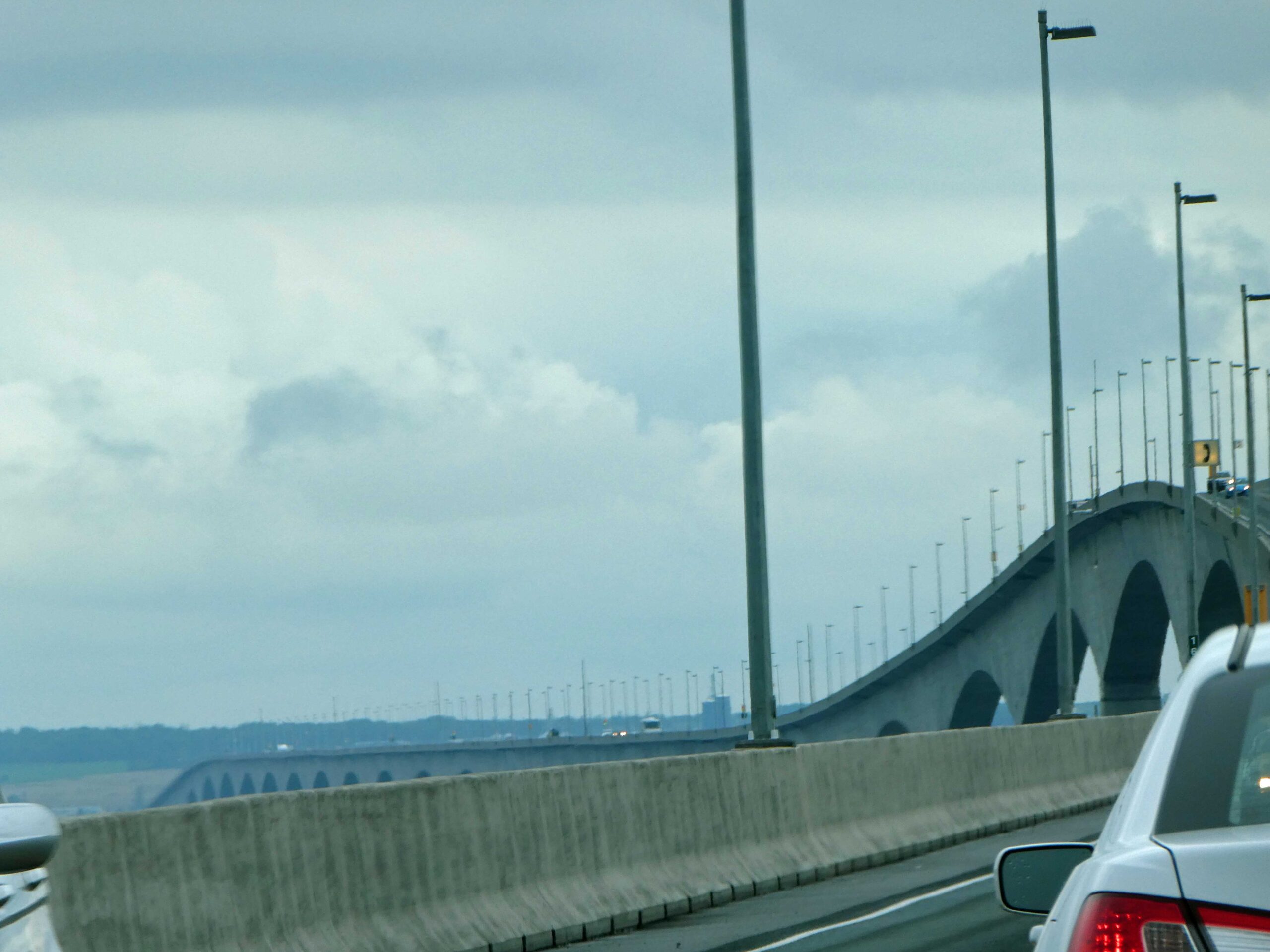
To get to PEI from New Brunswick, which is the path we took, you cross a ridiculously long bridge. When we say ridiculously long, we mean it. The Confederation Bridge span is 8 miles, and is actually Canada’s longest bridge. When the water underneath it freezes, which it does, it becomes the longest bridge over ice in the world.
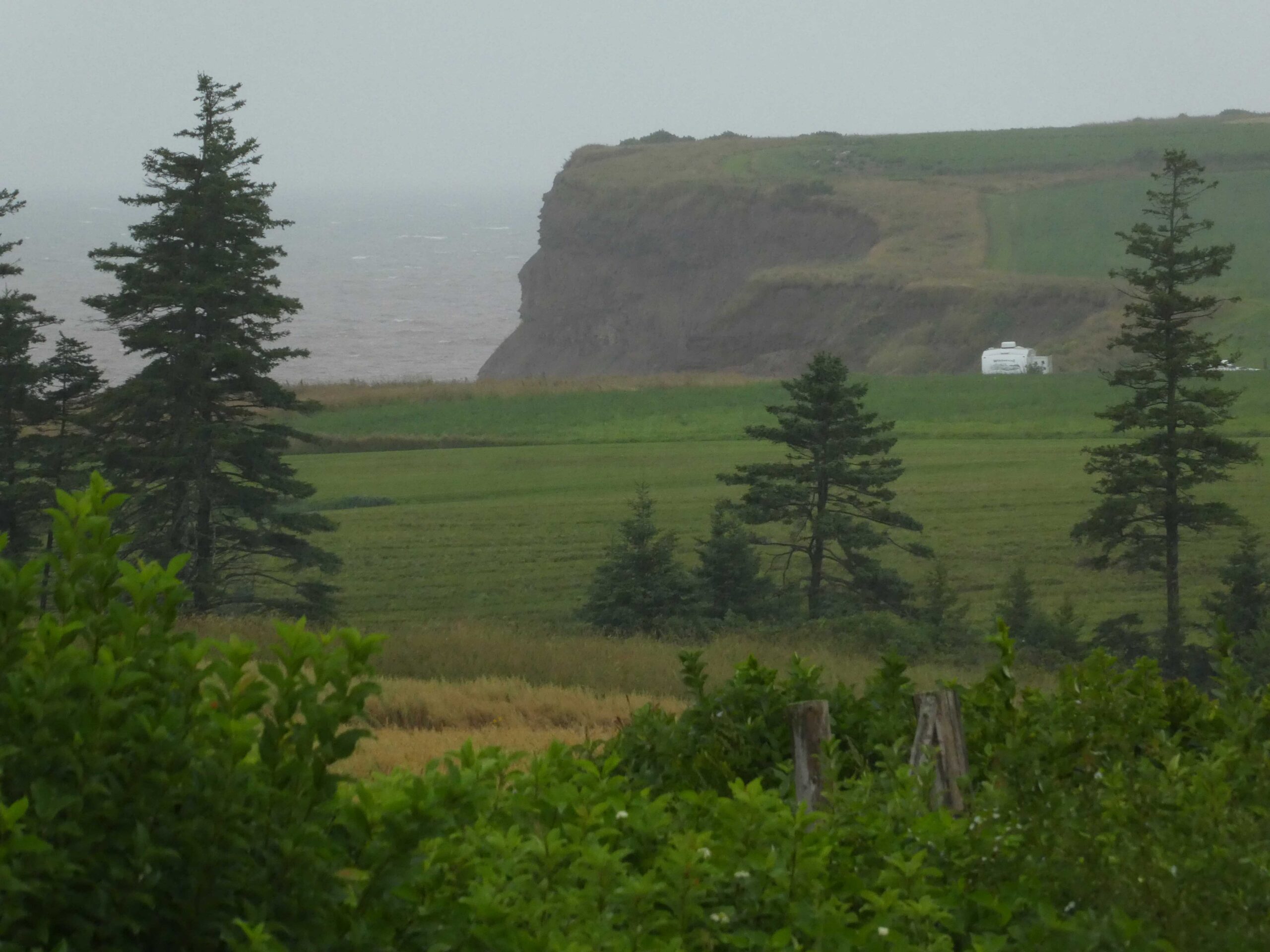
After you cross the bridge, you may encounter signs for the Canadian Potato Museum. You’ll also come across the Stompin’ Tom Centre, where you can learn more about his music and how his foundation helps promote Canadian music. We actually didn’t visit either. Our time on the tiny island was short and we were mesmerized by scenery like this cliff on the western shore of the island.
The proliferation of perfect spuds comes from an island made of deep red dirt that you encounter everywhere. Here are some pictures of the red dirt from our drive featuring North Cape and Wood Islands.
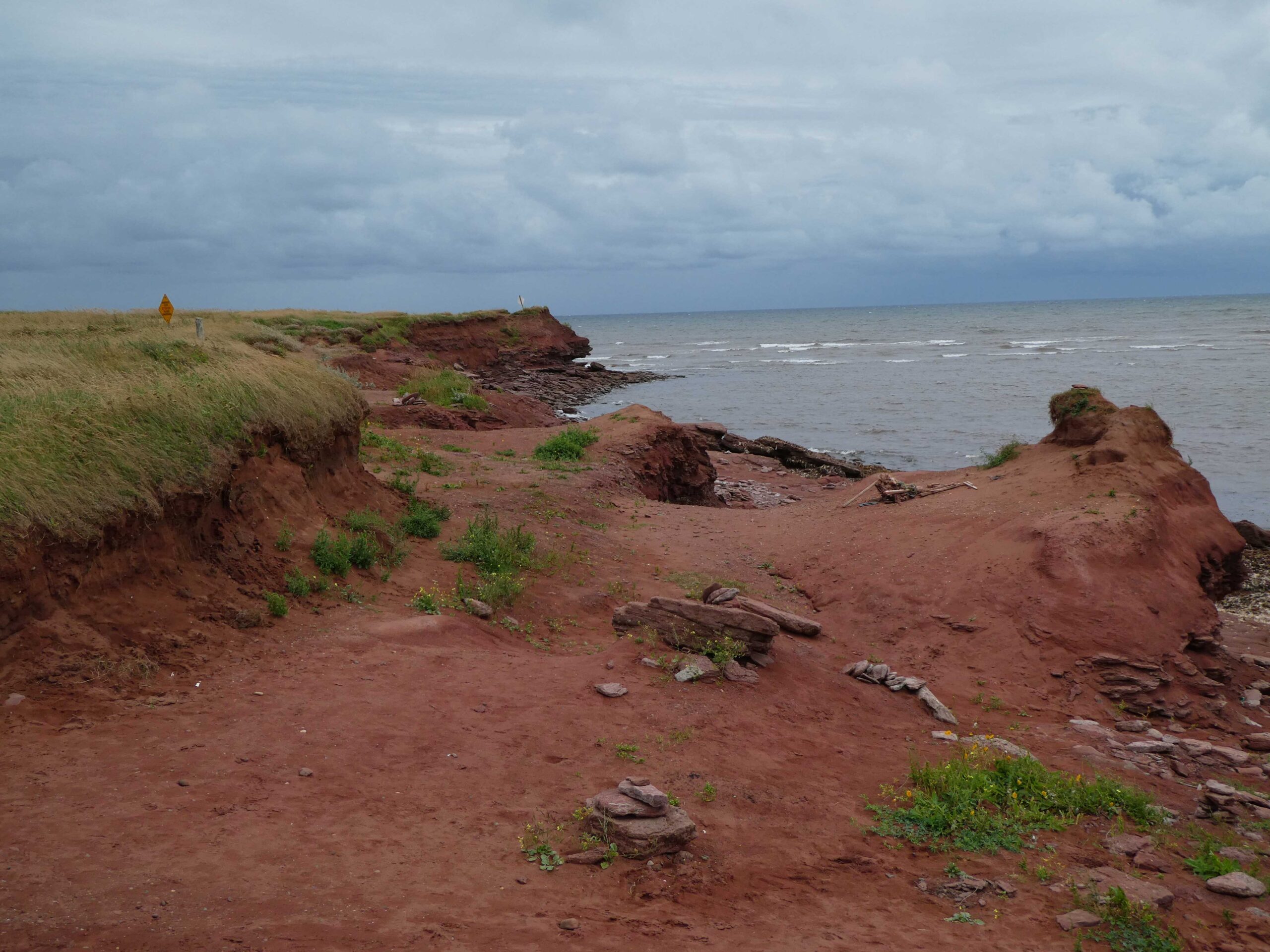

These are coastal pictures, but believe us when we say the entire island is like this. We didn’t actually think to take pictures of potato fields as we were driving by. Residents of PEI are so proud of the red dirt (how come we only know about the mussels???) that they even sell shirts dyed in red dirt and vials of red dirt to take home. You can’t find a mussel-related souvenir in Charlottetown, but we are now the proud owners of a dirt shirt and the dirt it was dyed in. We were a little nervous the first time we threw the “red dirt shirt” (yes, that is the name of a thing) into the wash as it was still gritty from the dying process.
Charlottetown, the capital city of the province, was our main destination and our overnight stay on the island. It only takes a small stroll along the waterfront to find the charm and see the appeal.
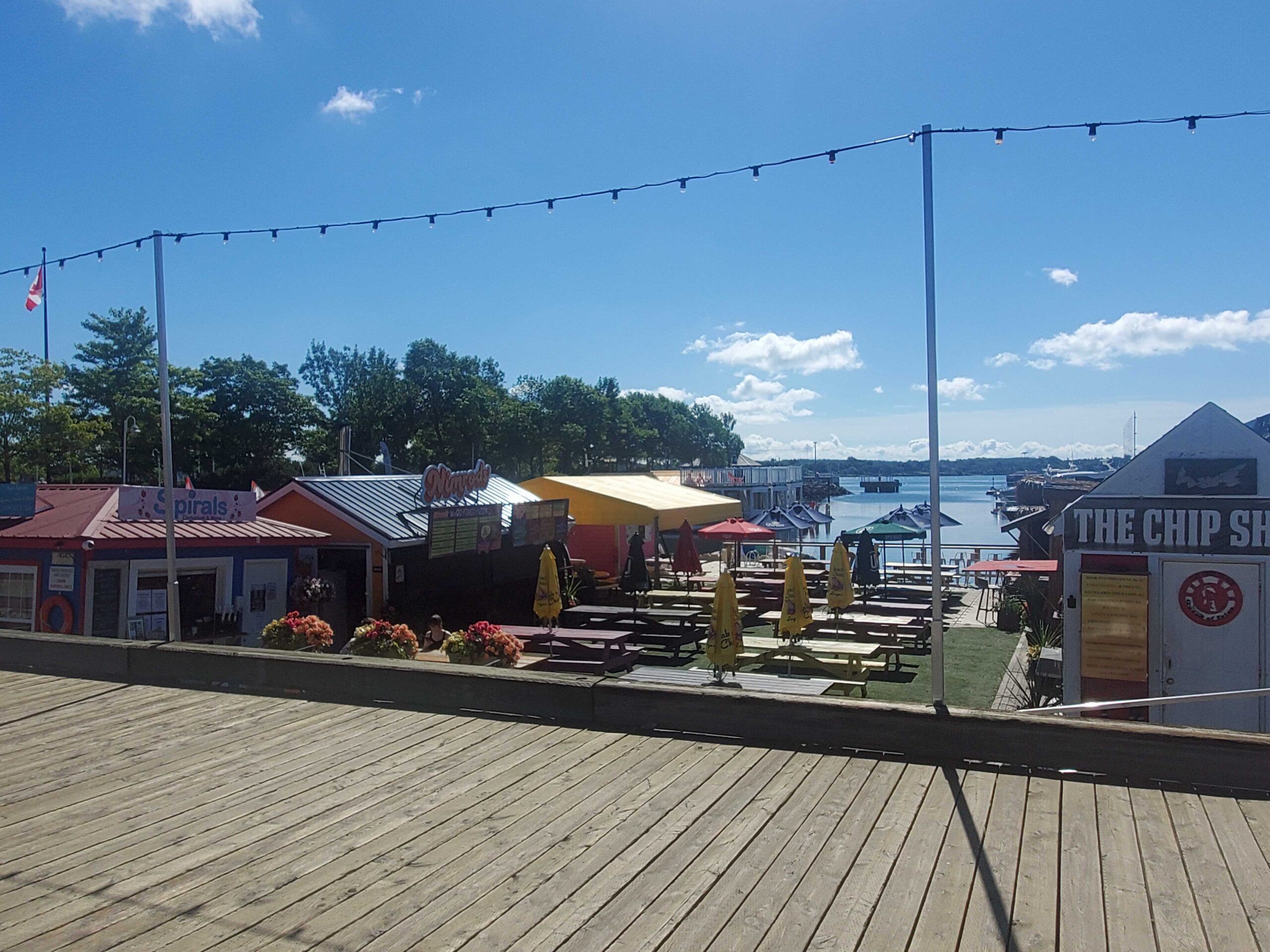
Charlottetown is a small town with all the benefits of a big city–a rare combination hard to find. We had an excellent meal at an upscale gastropub that also had a second level that was a pub and bar with live music. The harbor and convention center are also a good example. Charlottetown attracts north americans (we saw a ton of people from New England as well as Canadians) from all over for events and to enjoy the charm.
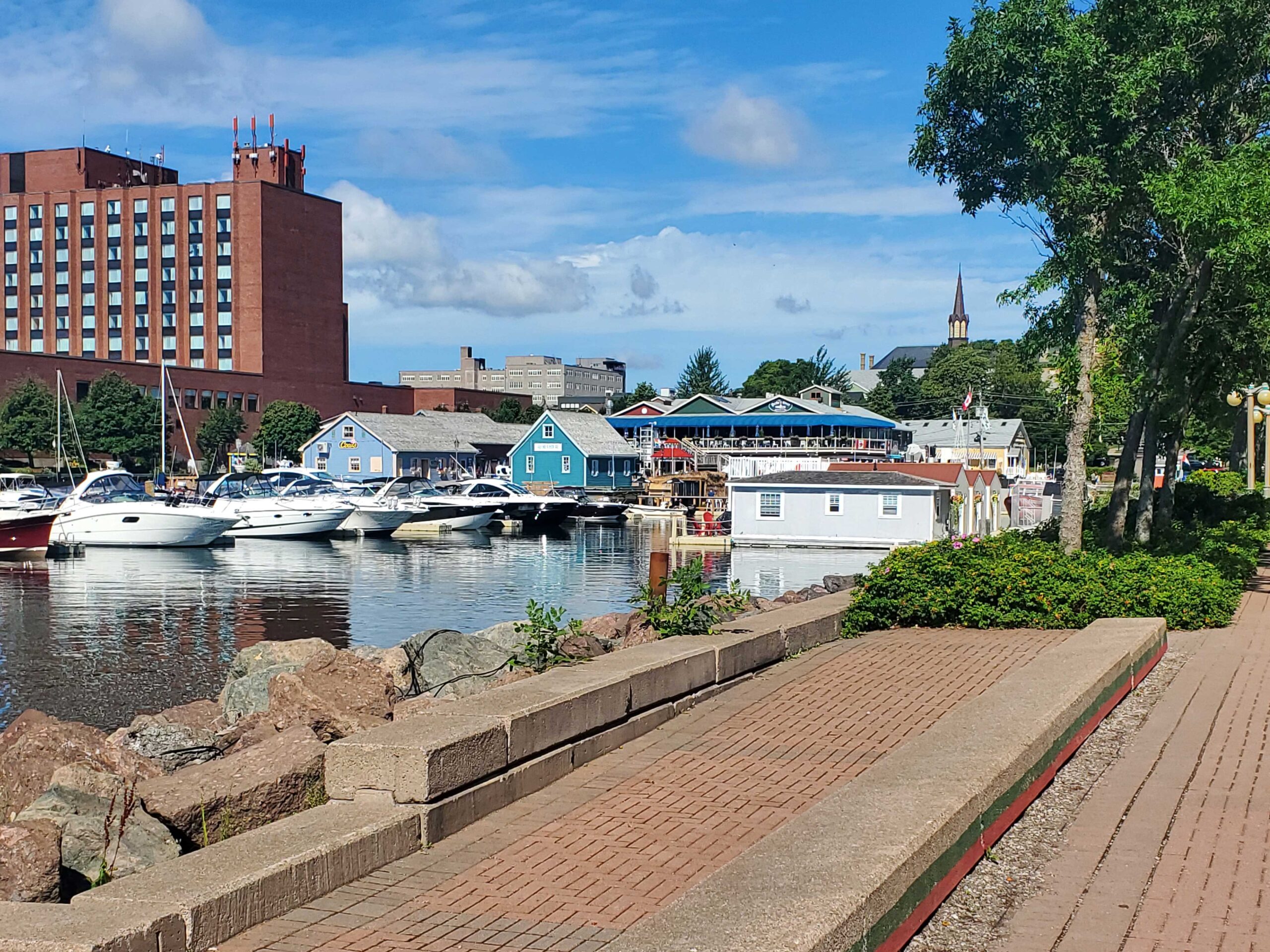
If you’re into the arts, there’s a theater house near by.
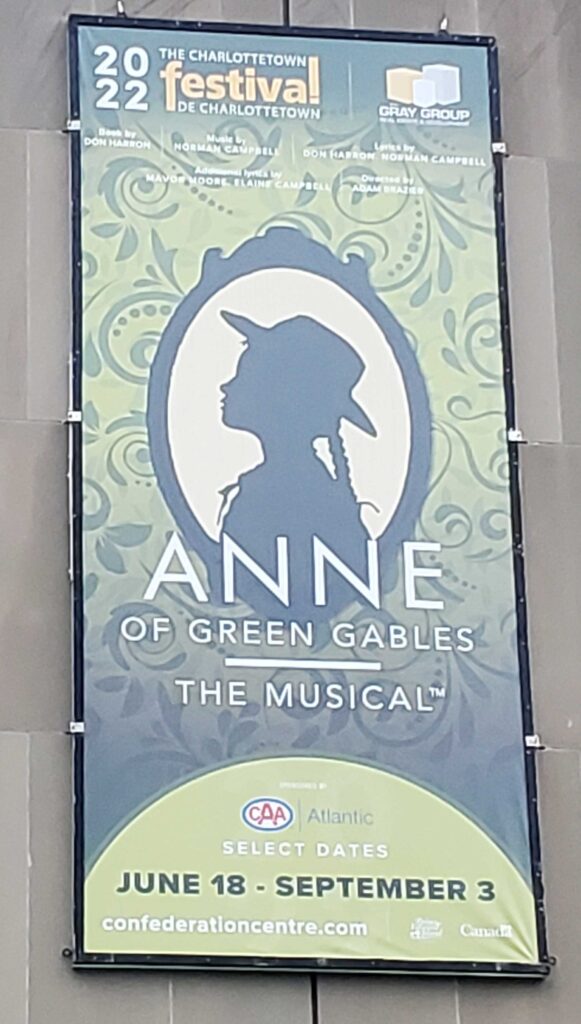
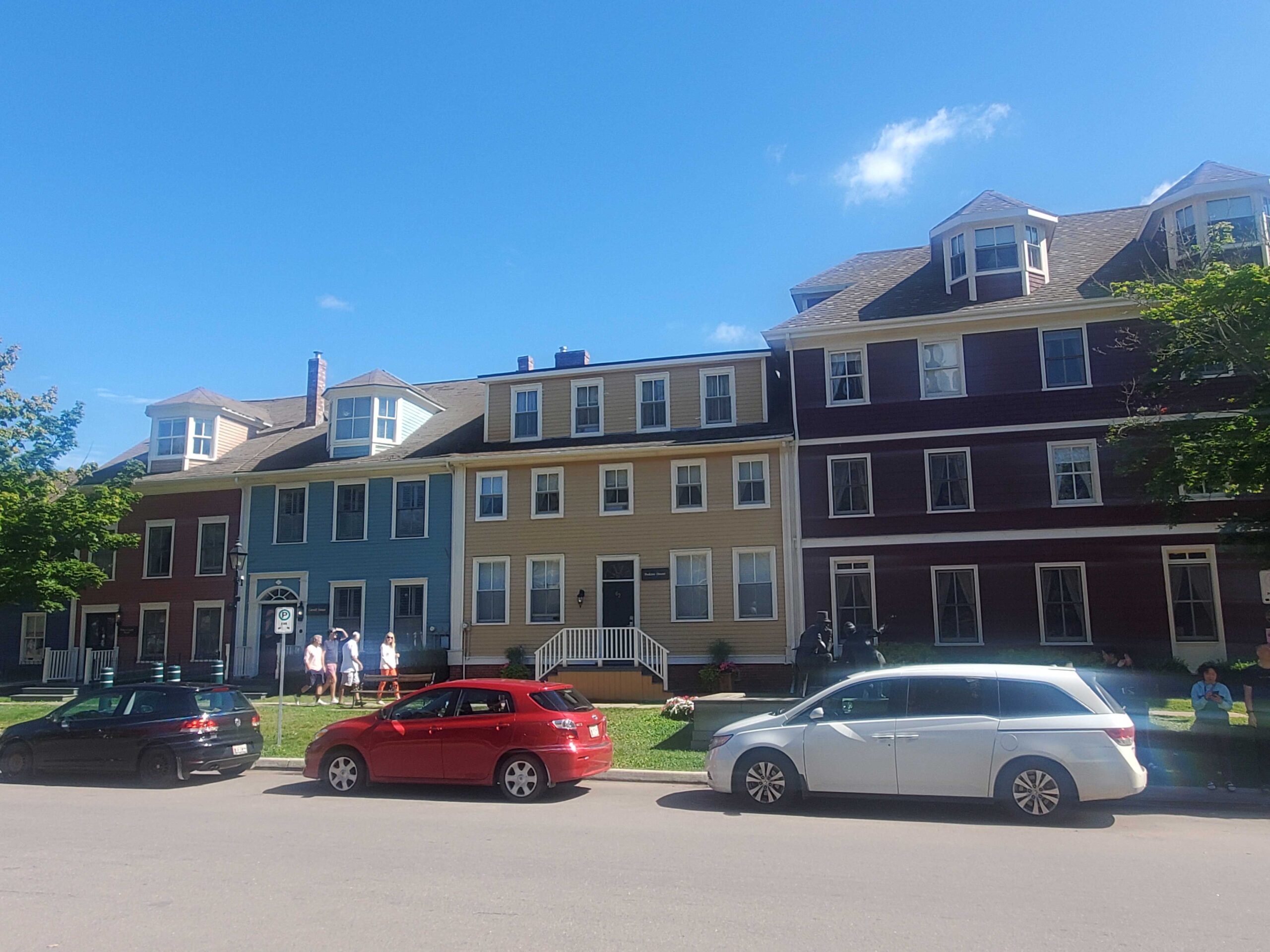
Current production is an Anne of Green Gables musical. Okay, forgot. In addition to spuds and red dirt, Anne is everywhere–including in musical theater. We didn’t visit her house either– as neither of us remember ever reading the book it seemed unimportant. I know, did we go anywhere important on PEI? We did stroll along some of the historic streets in Charlottetown where lucky residents have apartments.
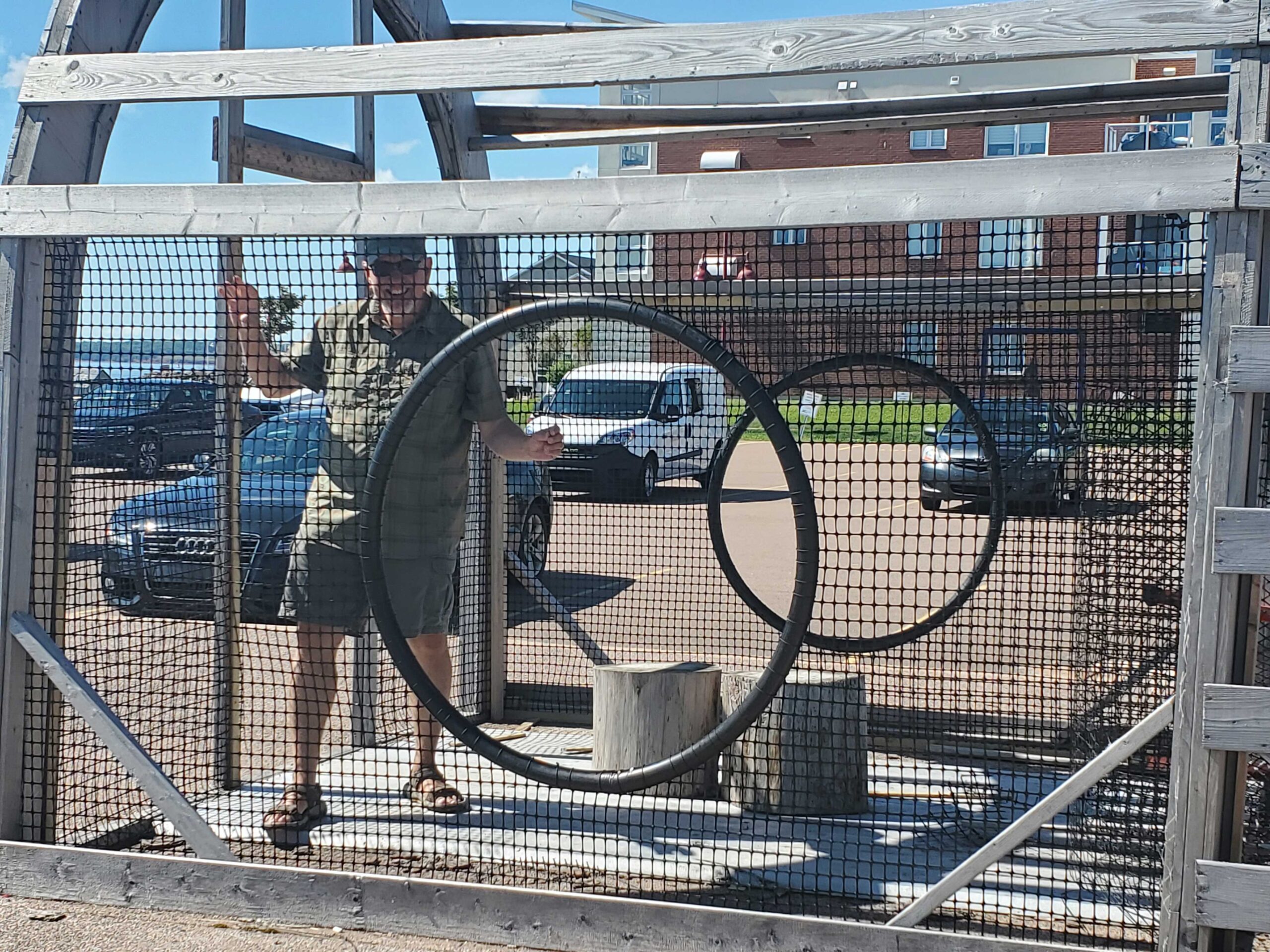
Somehow, we don’t know how, Jake got caught in a giant lobster trap on the waterfront and we had an adventure getting him out. Oh yeah, there’s more than just mussels in PEI. They have things like lobster too and it’s all fresh.
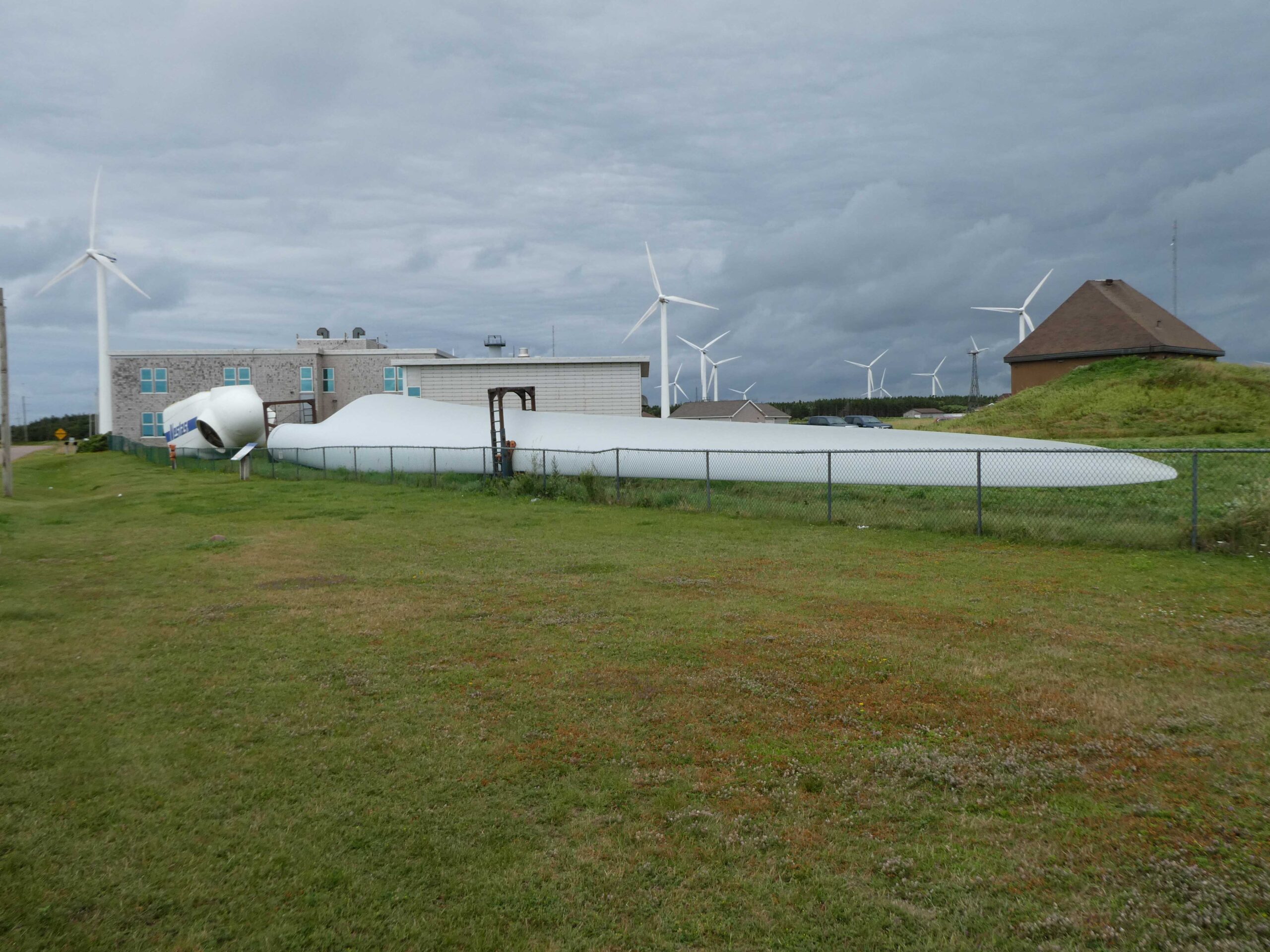
On our way to Charlottetown, we did go visit North Cape, the farthest northwestern point of PEI. Instead of potatoes, folk music, and Anne of Green Gables, the focus of North Cape is on wind power, because they get a lot of wind. The Canadian Coast Guard maintains a lighthouse here right next to the Wind Energy Institute of Canada.

You obviously get an idea that the wind turbines you see scattered across North America are big, but you really don’t have any idea how big until you’re standing right next to the dismantled parts lying on the ground.
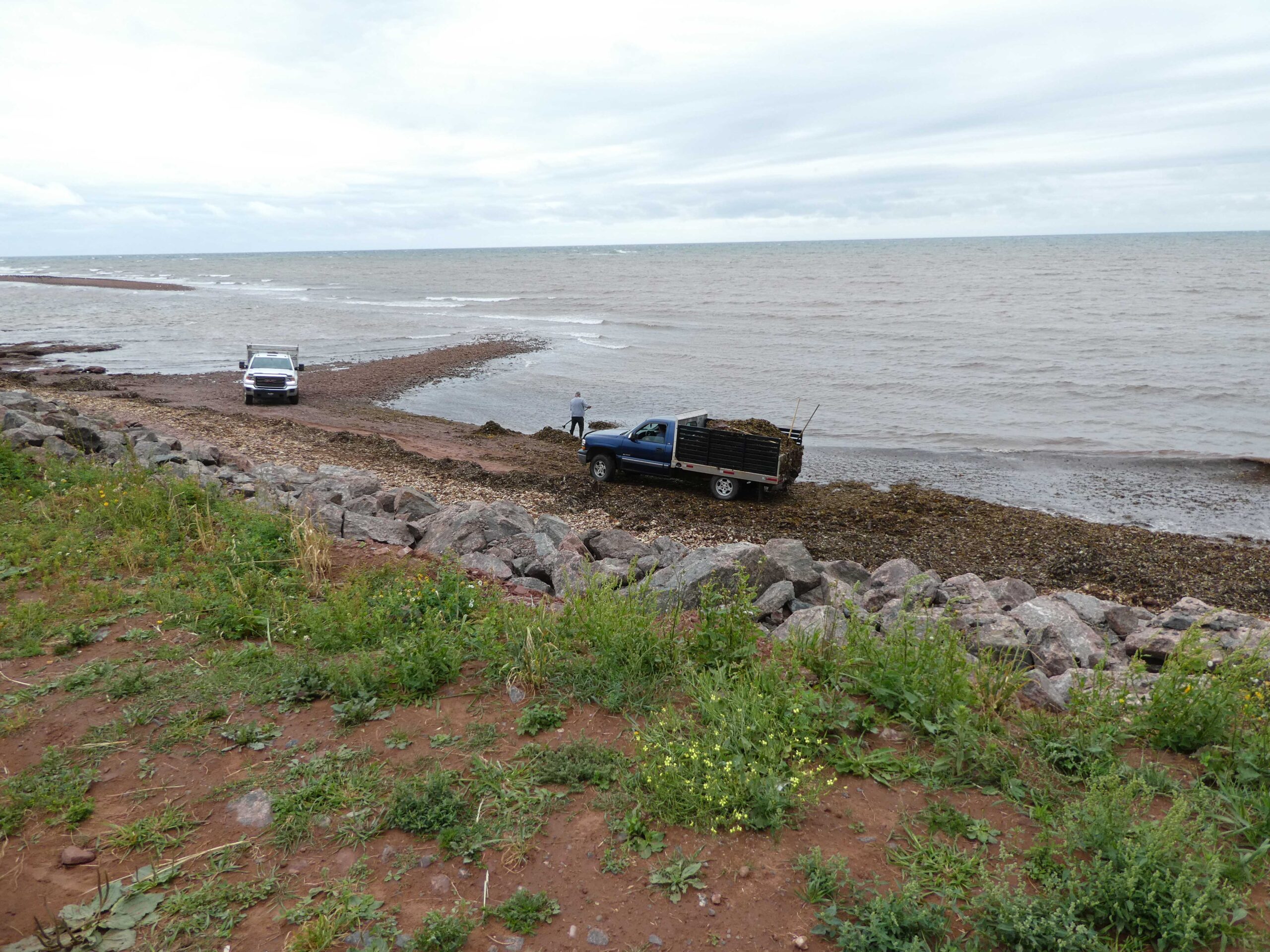
Okay, discoveries about PEI beyond mussels: spuds, red dirt, Anne of Green Gables, and wind power. Driving along North Cape and enjoying the scenery, we discovered one more. How about Irish Moss? That one might puzzle most of you, but if you’ve ever brewed beer, you know that Irish Moss is an essential ingredient for clarifying beer. It is also known as carrageenan, the thickening agent in yogurt and ice cream (crappy ones, says Ande). It thrives in the North Atlantic, and we happened upon harvesters literally using pitch forks to toss large clumps onto trucks.
On our tour of the North Atlantic provinces of Canada, PEI was a stopover on the way to Cape Breton and a ferry to Newfoundland. That took us to the Wood Islands Ferry dock and lighthouse.
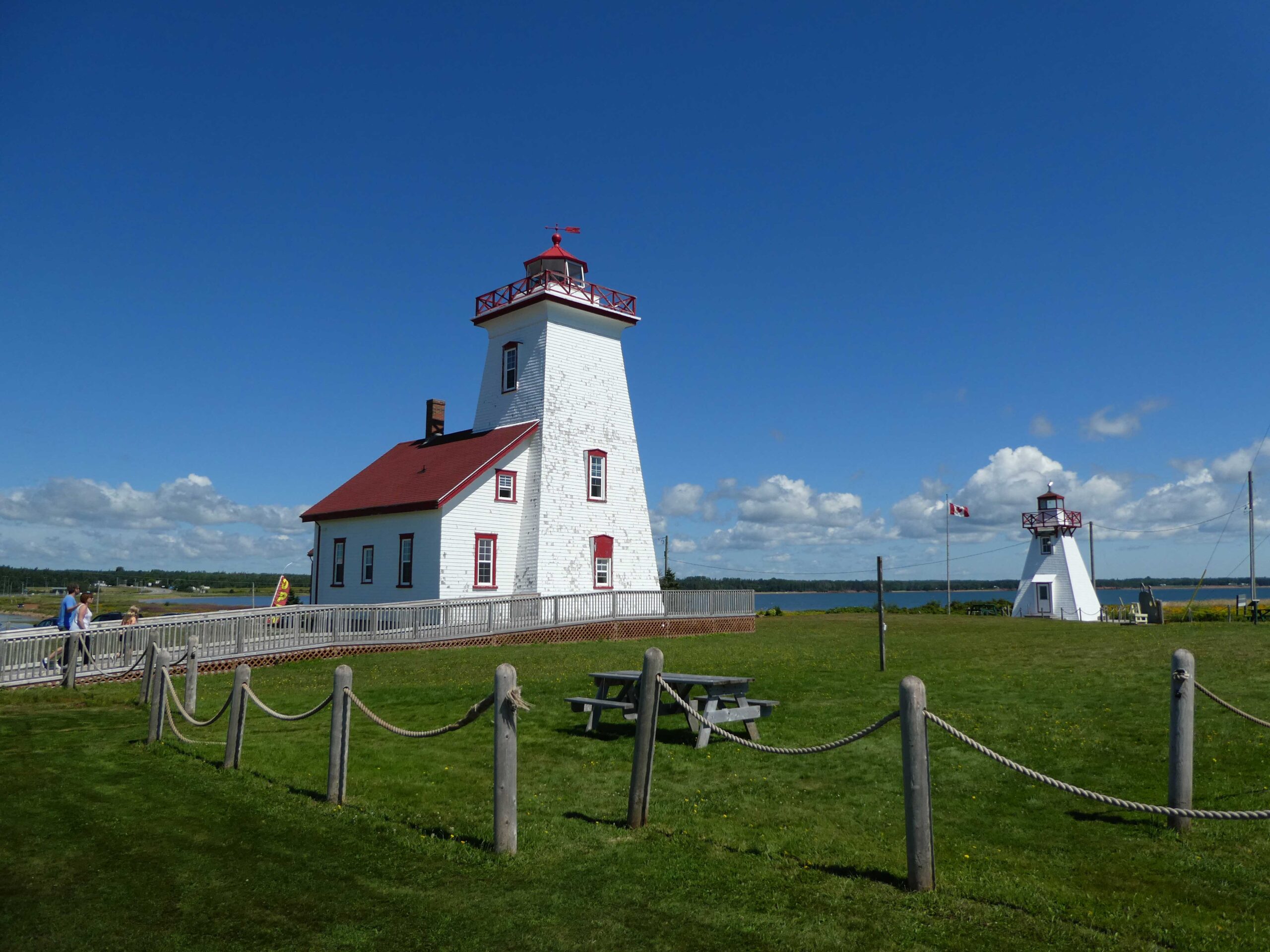
I believe we mentioned in a previous post that the Atlantic Provinces were thick with churches and lighthouses. Well, this was a nice one and worth mentioning. Also, as we probably mentioned before, travel can be unpredictable. As we were trip planning a couple weeks before our arrival in the North Atlantic, we were sitting in our B&B in Quebec City watching the news when a feature story was about a fire on a ferry that stranded passengers and reduced ferry crossings. Well, here’s that ferry.

This picture was taken from the ferry we actually caught to make the crossing. We could only confirm the times a day before and felt lucky we were able to make the water crossing instead of driving the bridge again. The ferry we were on was much larger and had a huge “mouth” hatch at each end that closed down and swallowed the cars before sailing.
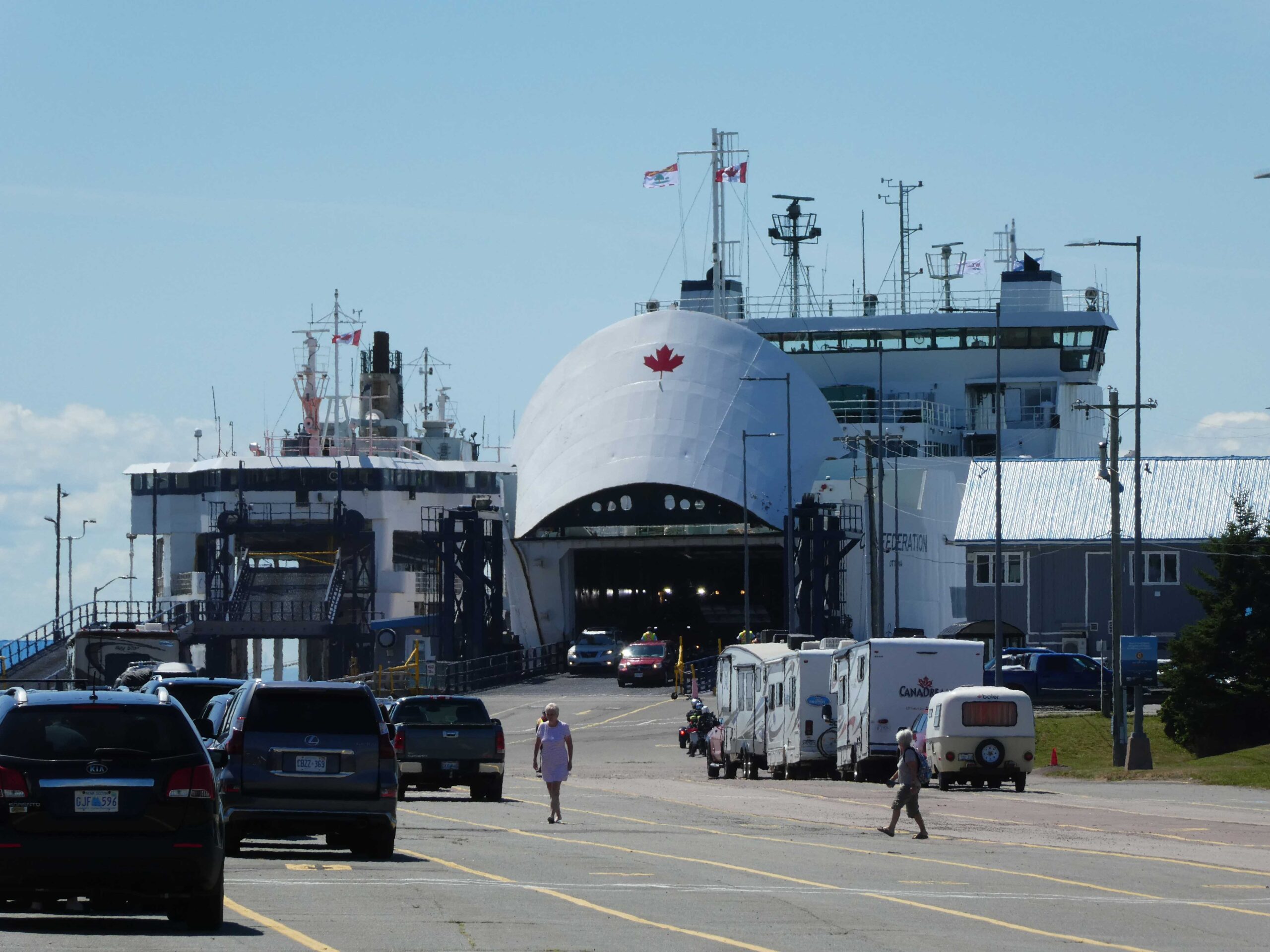
With that ferry crossing on 15-August-2022, we ended our short but extremely educational time on Prince Edward Island. So, Prince Edward Island is so much more than mussels to the locals and the world. Next time you’re enjoying a bowl of mussels steamed in tomatoes or chorizo broth, remember there is more to the tiny island than just one species of shellfish. Also, don’t eat the ones that don’t open. That’s a story for another time.