Pablo Neruda is probably one of Chile’s most famous personalities. As a poet, activist, and advocate for his country, his name and the country are indelibly linked. I’ll only do a poor job of describing his poetry and contributions to his country and the world of literature. You can read about Pablo Neruda from many sources that will be much more comprehensive. Suffice to say, he had three houses in Chile, each representing different periods in his life, poetry, and very different faces of Chile. All three houses are now maintained by the Pablo Neruda Foundation as museums, La Chascona in Santiago, La Sebastiana in Valparaiso, and Isla Negra in the location of the same name south of Valparaiso. I studied Pablo Neruda’s poetry in graduate school and translated some works for my foreign language credits. Chile fortunately offers a glimpse into his personal life you can get nowhere else, and following in his footsteps is motivation enough to want to visit.
La Chascona
Pablo Neruda’s house in Santiago is in Barrio Bellavista, where many of Santiago’s many other attractions are located. Stealing directly from the Pablo Neruda Foundation website, “In 1953, Pablo Neruda started to build a house in Santiago, for Matilde Urrutia, his secret love in that time. He called the house “La Chascona” in her honour, that was the nickname he gave her due to her abundant red hair.”
La Chascona is actually a series of buildings somewhat interconnected by the gardens tumbling down the hill at the bottom of Cerro San Cristóbal.
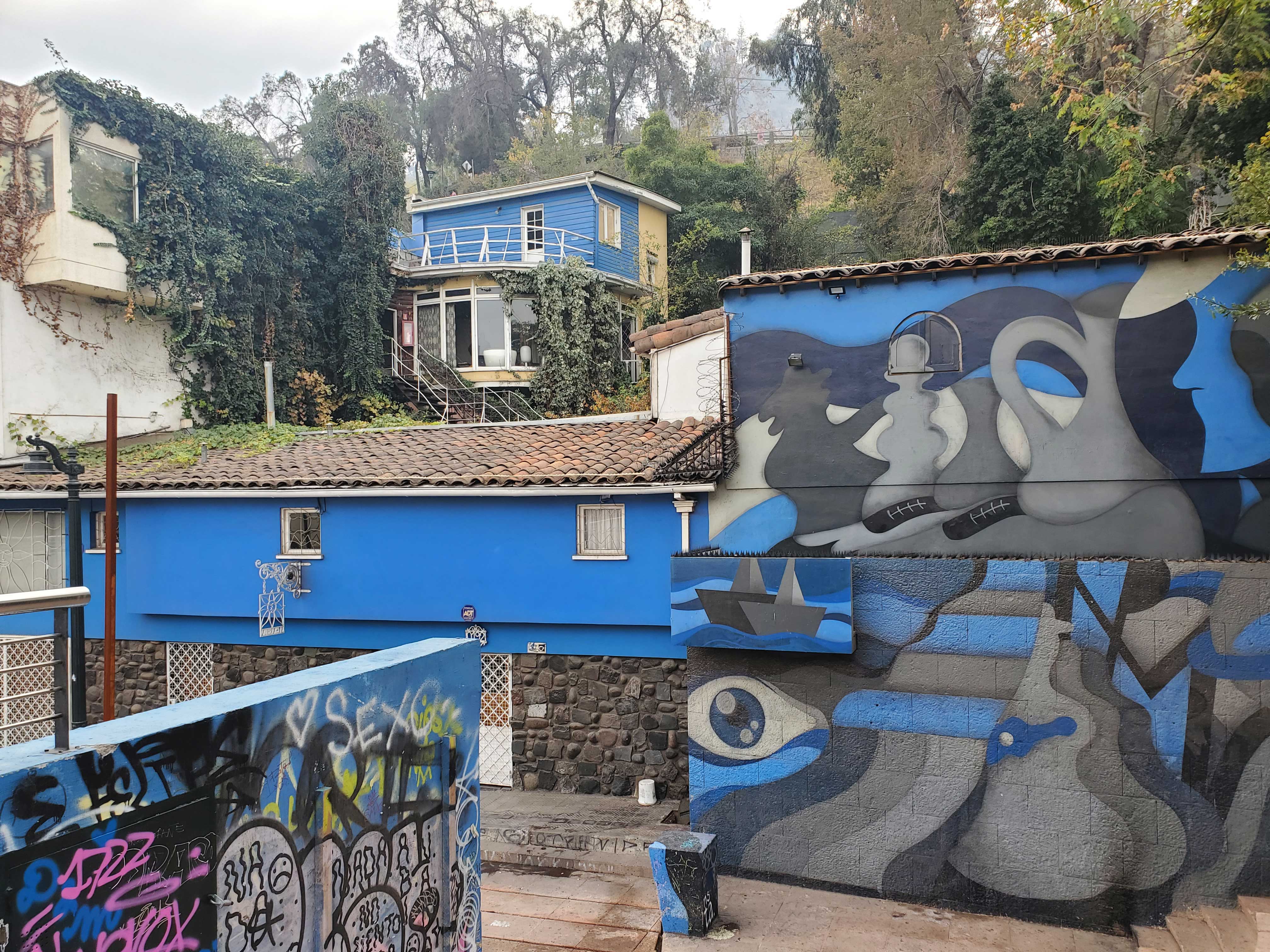
To get the general layout of the property, the building in front contains the Captain’s bar and dining room where Neruda would entertain guests. The floors above the dining room were the bedrooms and office for Matilde with a door leading out to the garden and stairs up to the living room in the building in the back. Not pictured in the gardens off the living room are another bar for summer entertaining and Neruda’s library.
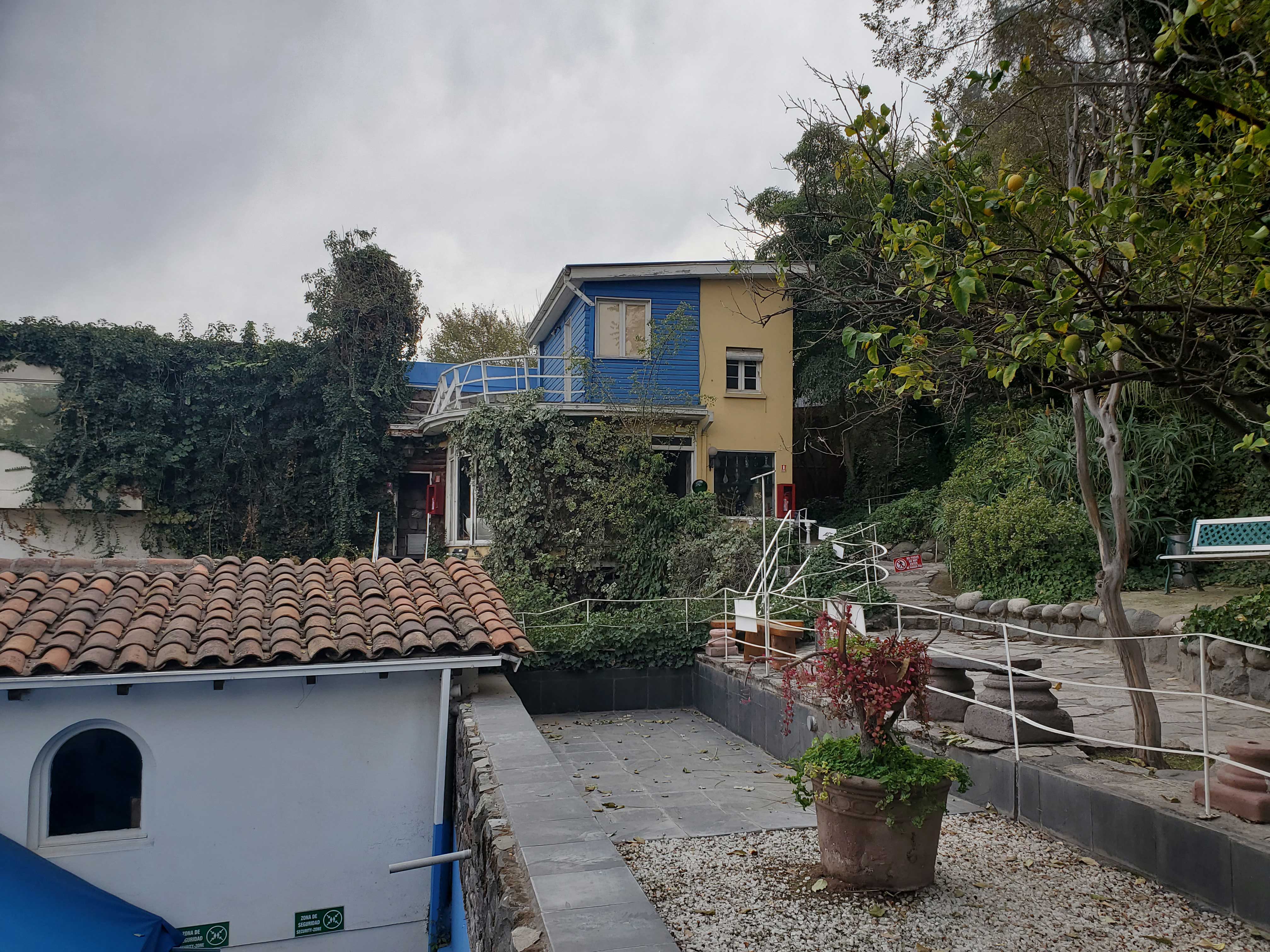
The property originally had a stream running through it that would cascade down the hill, through the garden, and along a channel outside the Captain’s bar. Pablo Neruda was in his sickbed in Isla Negra when the military coup of September 1973 took place, and died in a Santiago hospital several days later. Supporters of the coup blocked the stream and flooded the house. In an act of defiance to the military government and to show the world the destruction, Matilde restored the property enough to hold a memorial for Pablo on the property, where his body and the vandalism caused by the violent overthrow of the government would be on full display to the world as dignitaries from all over the globe came to pay their respects. This is the living room as it is preserved today with may of the original artifacts Pablo and Matilde held dear.
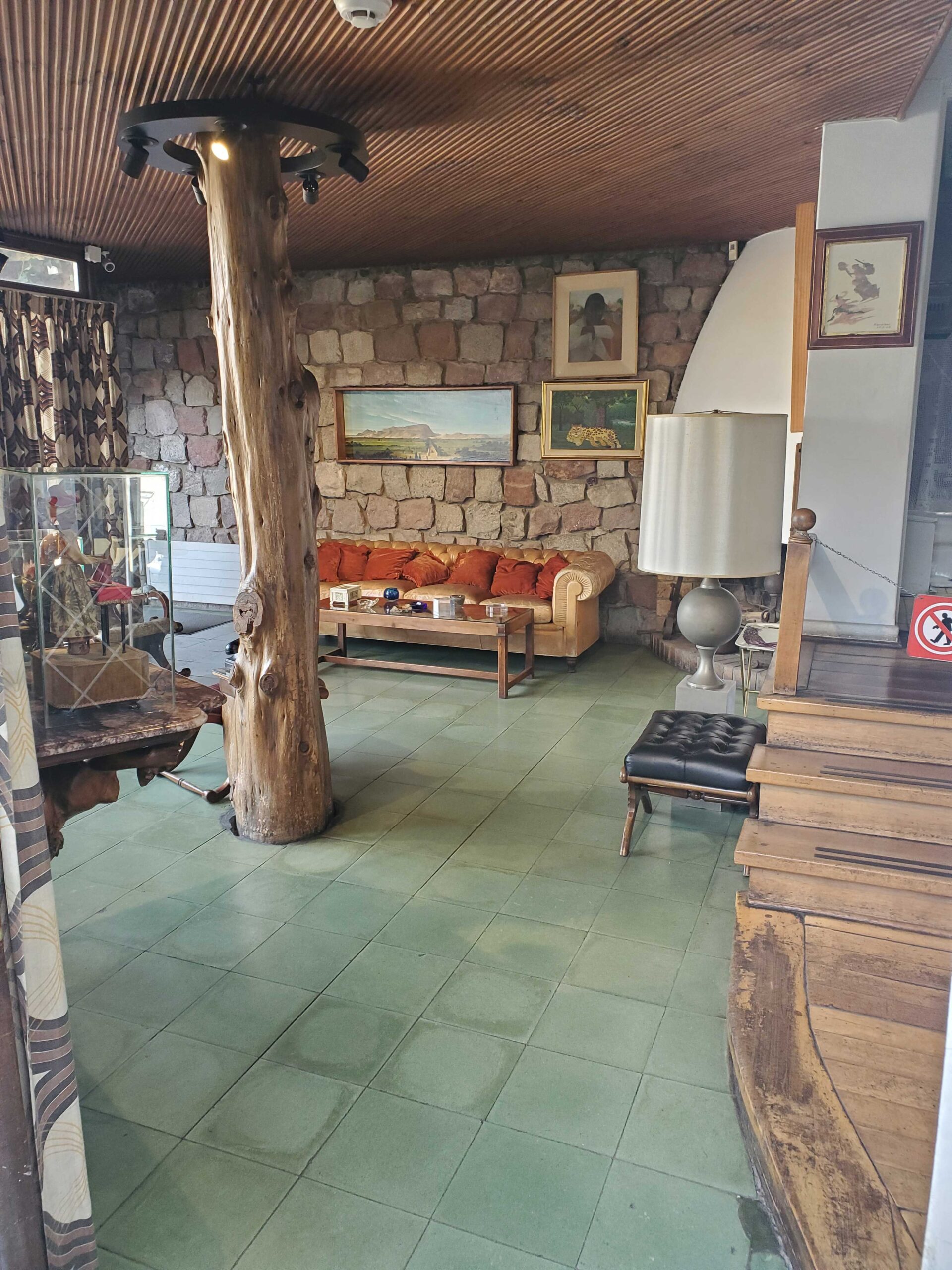
Photography isn’t allowed inside the rooms, but you can take as many photos as you want from the outside. This shot of the living room comes from outside the door into the garden where the open-air summer bar was located. It is now preserved behind glass, but we did our best to try and capture some of the atmosphere through the barrier.
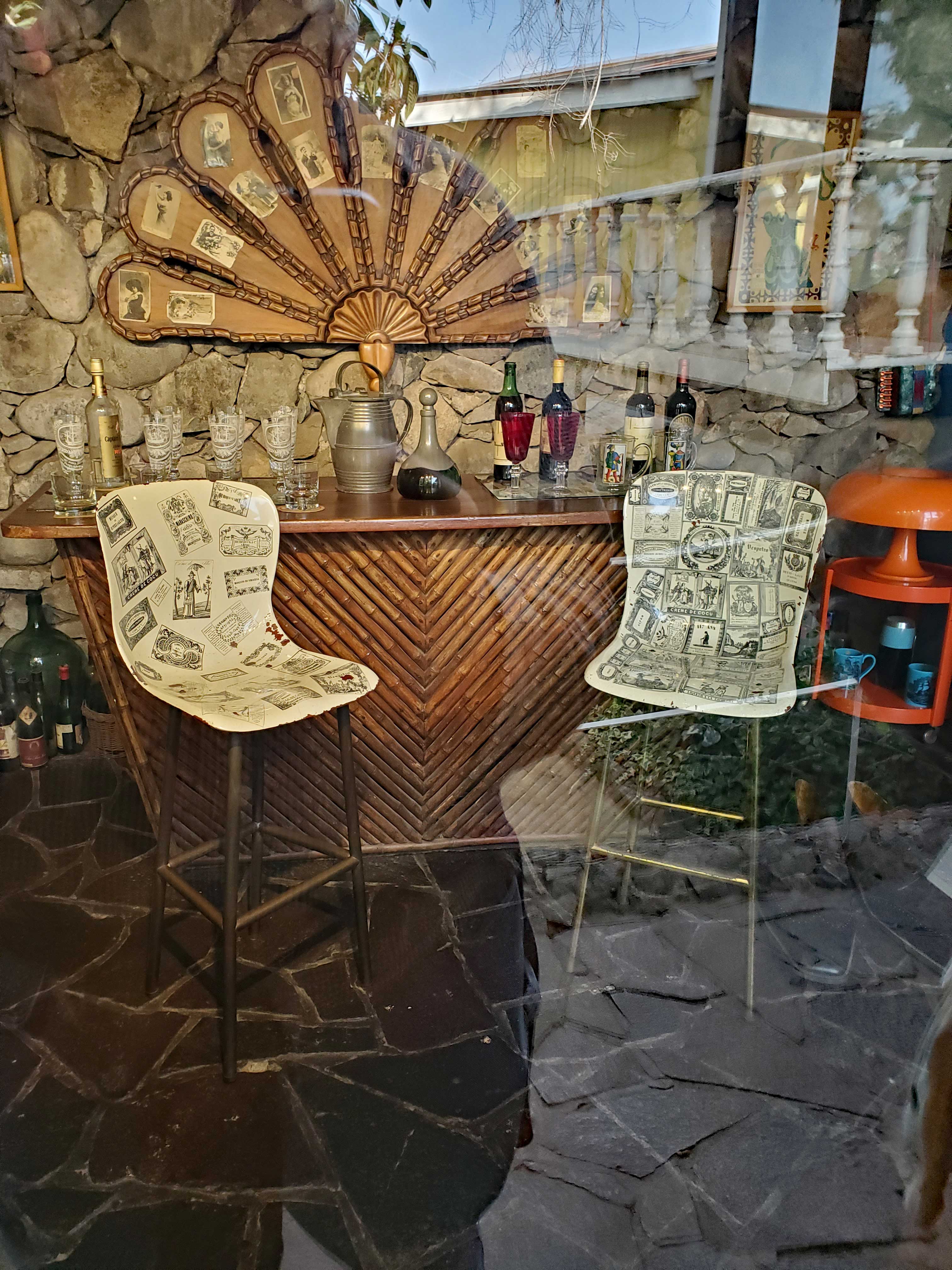
The reflection in the window is of the patio railing that leads up to Neruda’s library. It is as much an extraordinary experience to walk through his library and by his desk where he worked as it was to visit Dali’s house in Cadaqués, Spain. Both had a rambling collection of buildings added over time at the artists whim and are frozen in time at significant periods in their lives. If time travel is possible, it happens at these locations.
For Neruda, the word “entertain” was taken literally when it came to entertaining is guests, and he wanted visits to be something his guests would remember and talk about. He set the stage in the way his house was arranged. Guests entered through the Captain’s Bar, containing glassware, furniture, and collectibles from his travels around the world. (Why have one bar, when you can have two?)
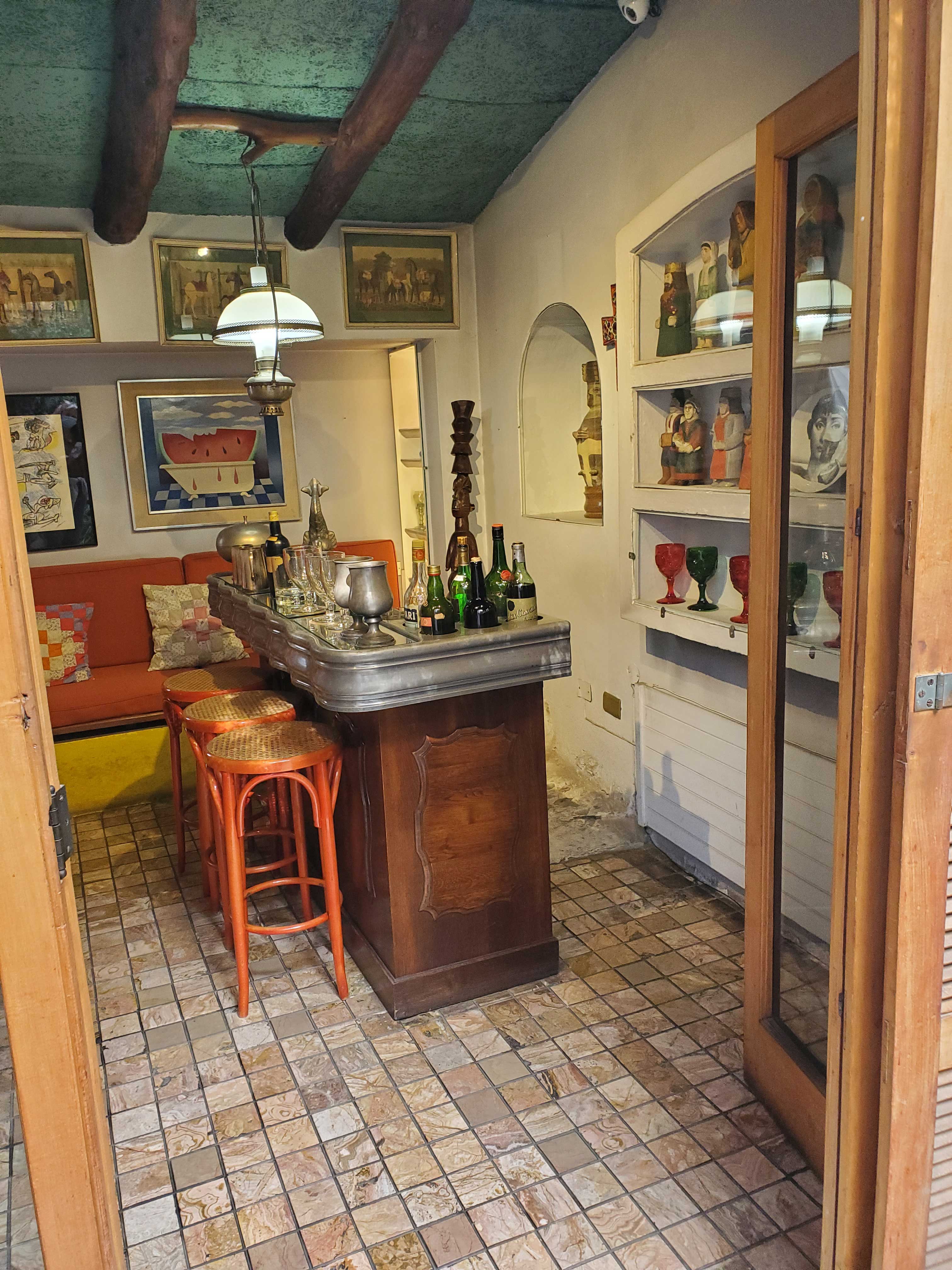
The bar top with the wavy front was actually salvaged from a ship. Left of the entrance and through the bar, where we couldn’t take pictures, is the narrow dining room with a long skinny table that could seat a dozen guests. It is surrounded again by treasures from overseas. At the far end of the dining room opposite the bar is a china cabinet. While guests were milling around the bar and dining room amazed and distracted by the items Neruda had collected, he would surprise his guests by emerging from a hidden door in the china cabinet that hides a secret staircase that lead to Neruda’s study where he would also retire after entertaining. His desire to entertain and sometimes also shock his guests and leave them with something to talk about extended even to the tableware. Two of the condiment containers in his beautiful blue and white Portuguese tableware are actually labeled “Marijuana” and “Morphine”.
I was lucky enough to get to visit twice, once while Ande was in quarantine, and then again with her after she was released. If you find yourself in Santiago, go visit. You’ll learn as much about the history and culture of Chile as you will about Pablo Neruda. As I said before, the are indelibly bound together. The final stage in the tour is in his library, where a collection of black and white photographs capture the events that took place after his death. Whether you’re a fan of the poet or not, that in itself is a moving experience.
La Sebastiana
After a week of Ande’s quarantine, we were ready to get out of Santiago and away from the pollution to see another face of Chile. We decided to rent a car and spend a couple of days in Chile’s second largest city, Valparaiso and also explore the Chilean coast. Valparaiso is a port city where Pablo Neruda bought a house in the early 1960s as a refuge from the busy life in Santiago. La Sebastiana was an unfinished mansion he bought, restored, and shared in partnership with his sculptor friend Marie Martner. I’d love to tell you about all of the wonderful treasures and stories we discovered in the huge house, but when we arrived by taxi, we were greeted by a locked gate with a torrent of water flowing out the front and down the road.
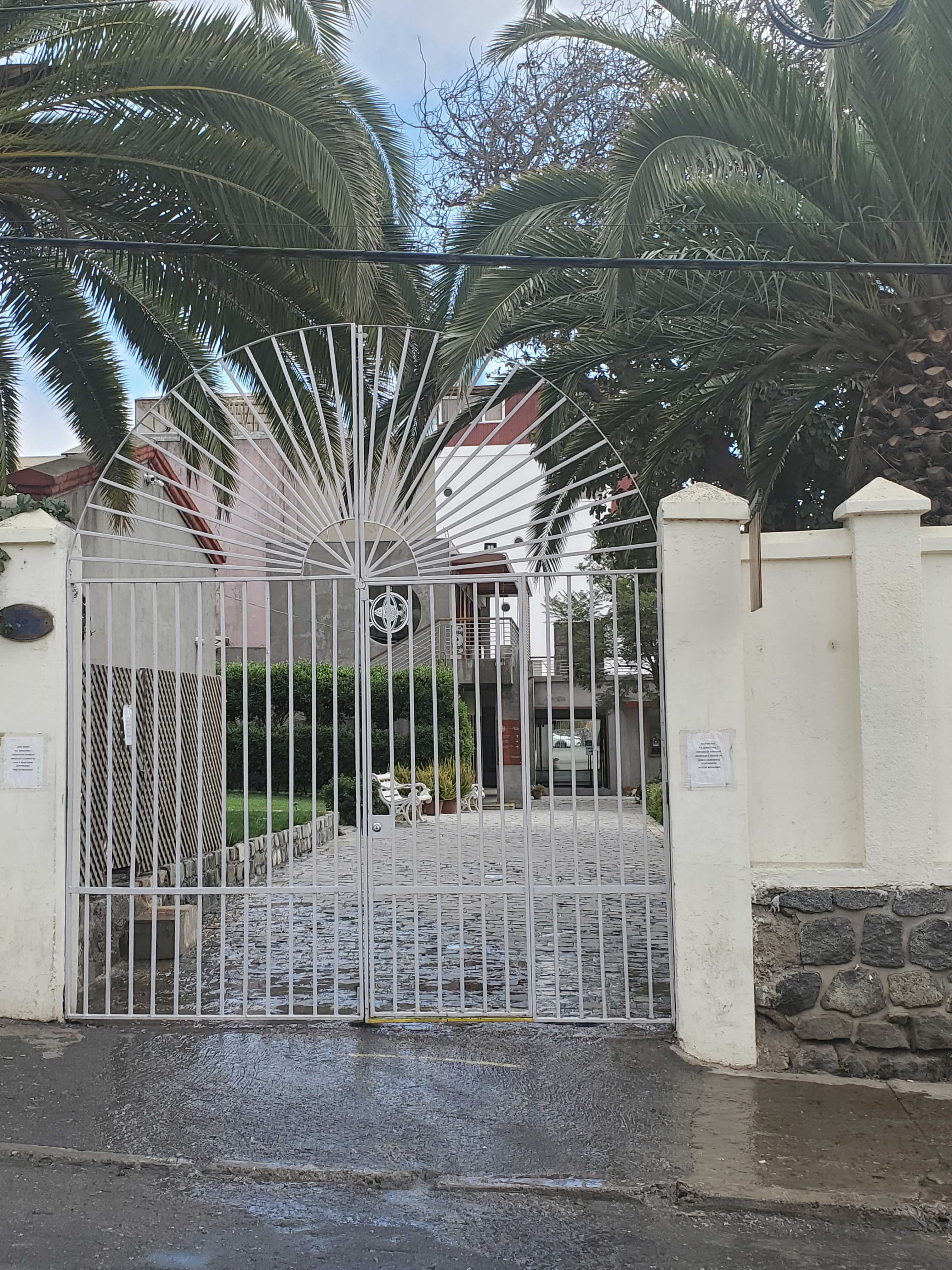
Turns out that on the ONE day WE decide to visit, they had a sewer main break, and the obviously very serious issues with the plumbing forced them to close the property to the public. With limited time in Valparaiso and no hope the house would be open again soon, we unfortunately did not get to visit.
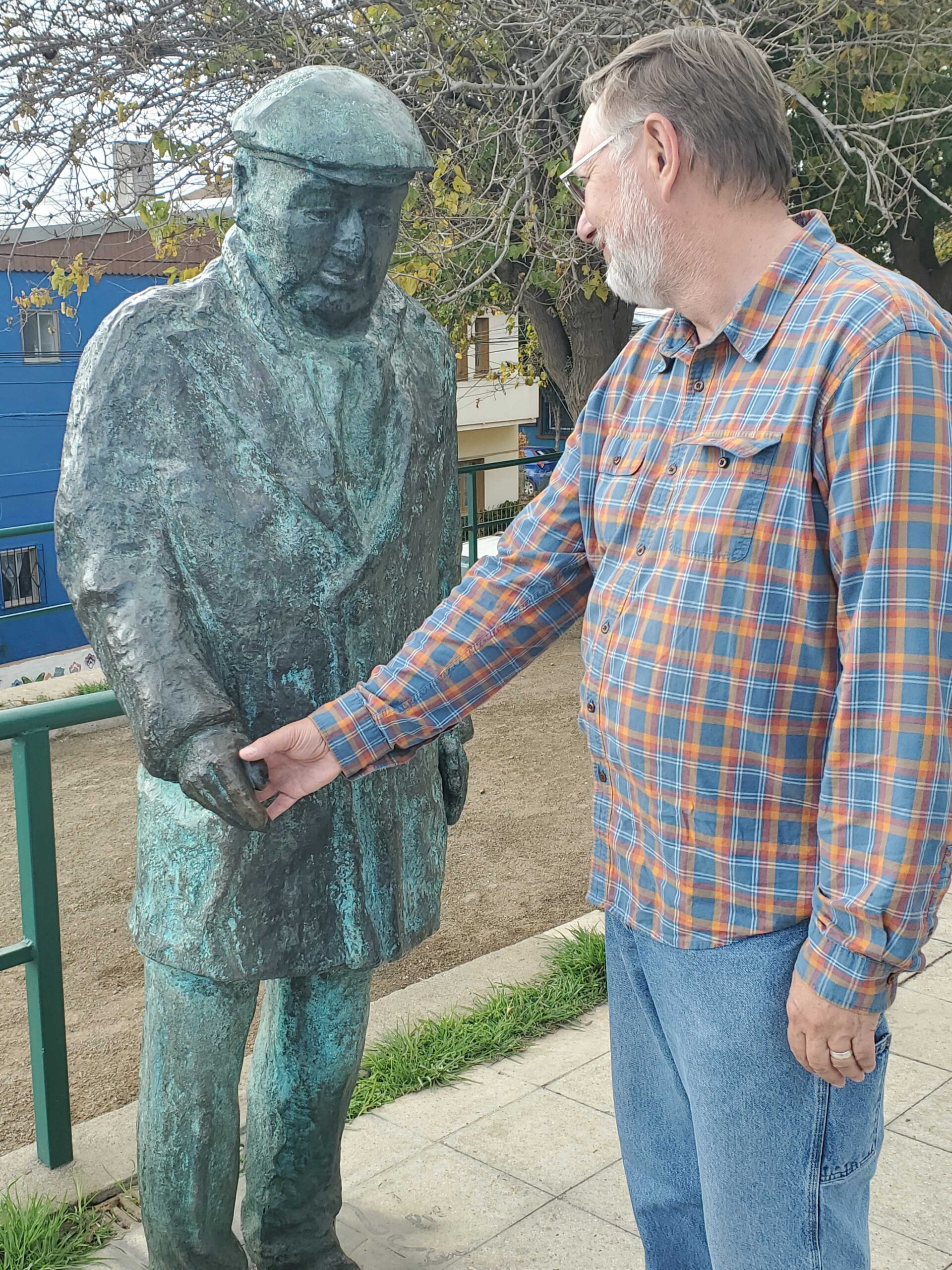
Somewhat shocked, surprised, and disappointed, and also now with time on our hands we didn’t anticipate, we decided to follow the river of water down the hill and explore the neighborhood if we couldn’t actually visit the house. The flood led us to Poets’ Park, where we got to meet Pablo in person and shake his hand.
Well, that’s all we have for La Sebastiana, but stay tuned for more on our wonderful visit to Valparaiso. We had a wonderful time exploring this fascinating port city and surrounding area, and we’ll cover that in a different post.
Isla Negra
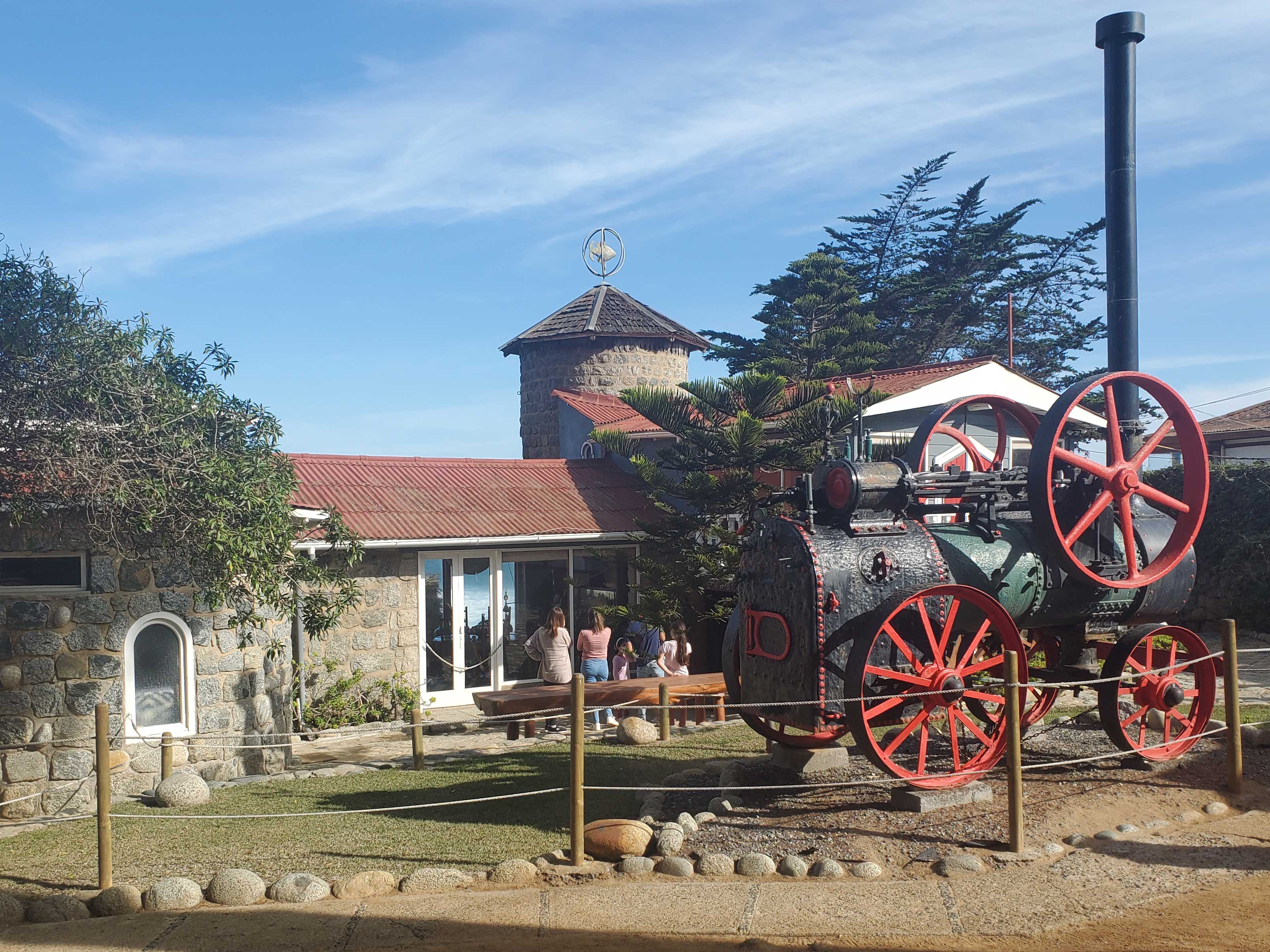
Isla Negra is the title of one of Pablo Neruda’s most popular and defining books of poetry and also the location where it was created. Situated on the rocky sea coast about and hour and a half south of Valparaiso, it is somewhat of a wonderland created by the poet. Pablo Neruda was a firm believer in keeping in touch with the joy and wonder of childhood. That belief is displayed time and again at Isla Negra. The gardens leading into the property are dominated by an old steam train engine, one of his passions from childhood.
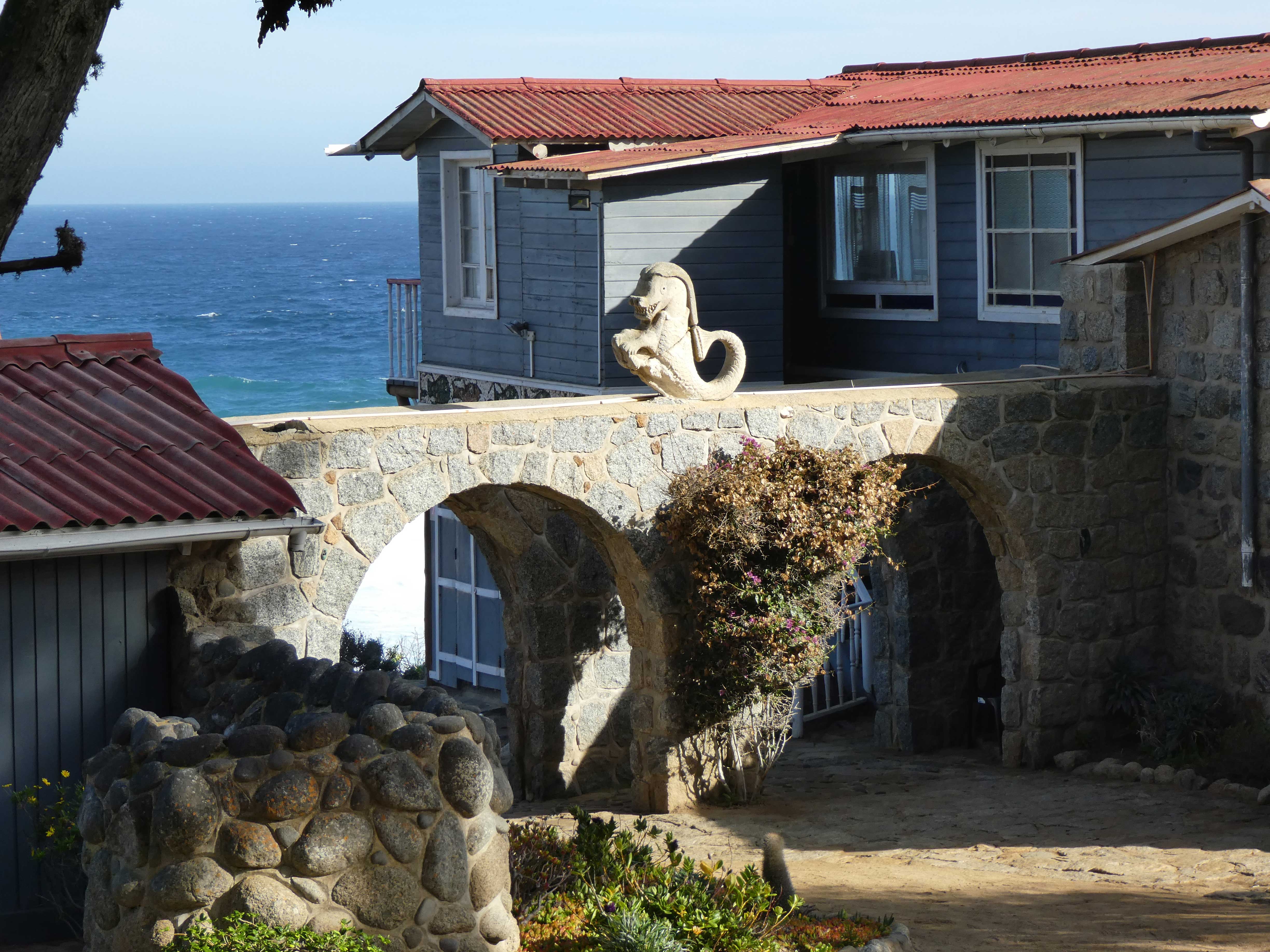
The archways connecting the two sections of the house are overseen by a whimsical concrete seahorse.
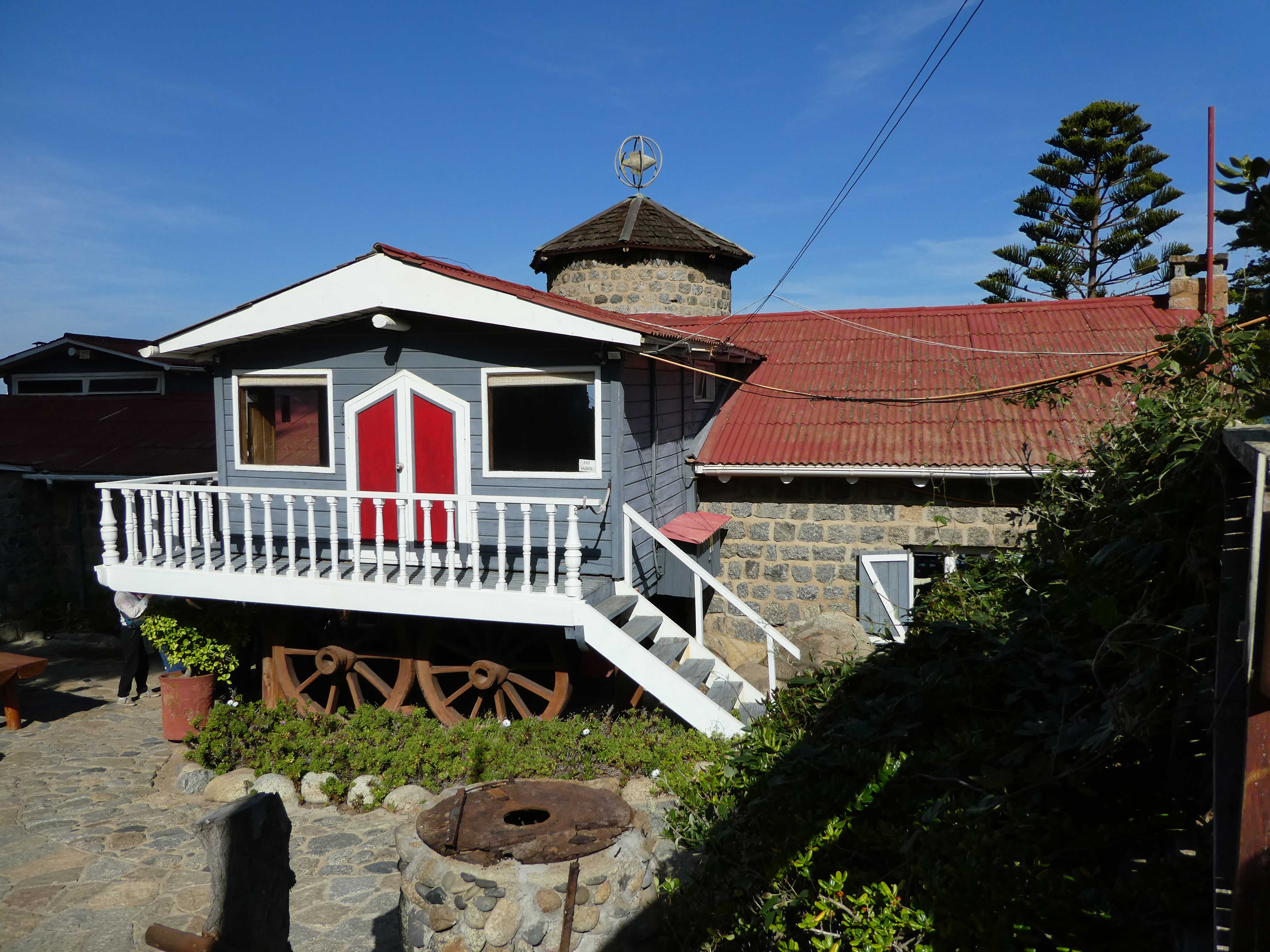
The weather vain over the top of the house is actually the fish symbol that became synonymous with the poet. (He was into branding and also had a P/M logo that symbolized his relationship with Matilde.) He also placed wagon wheels under the deck of the main house to give the impression that it could be wheeled away.
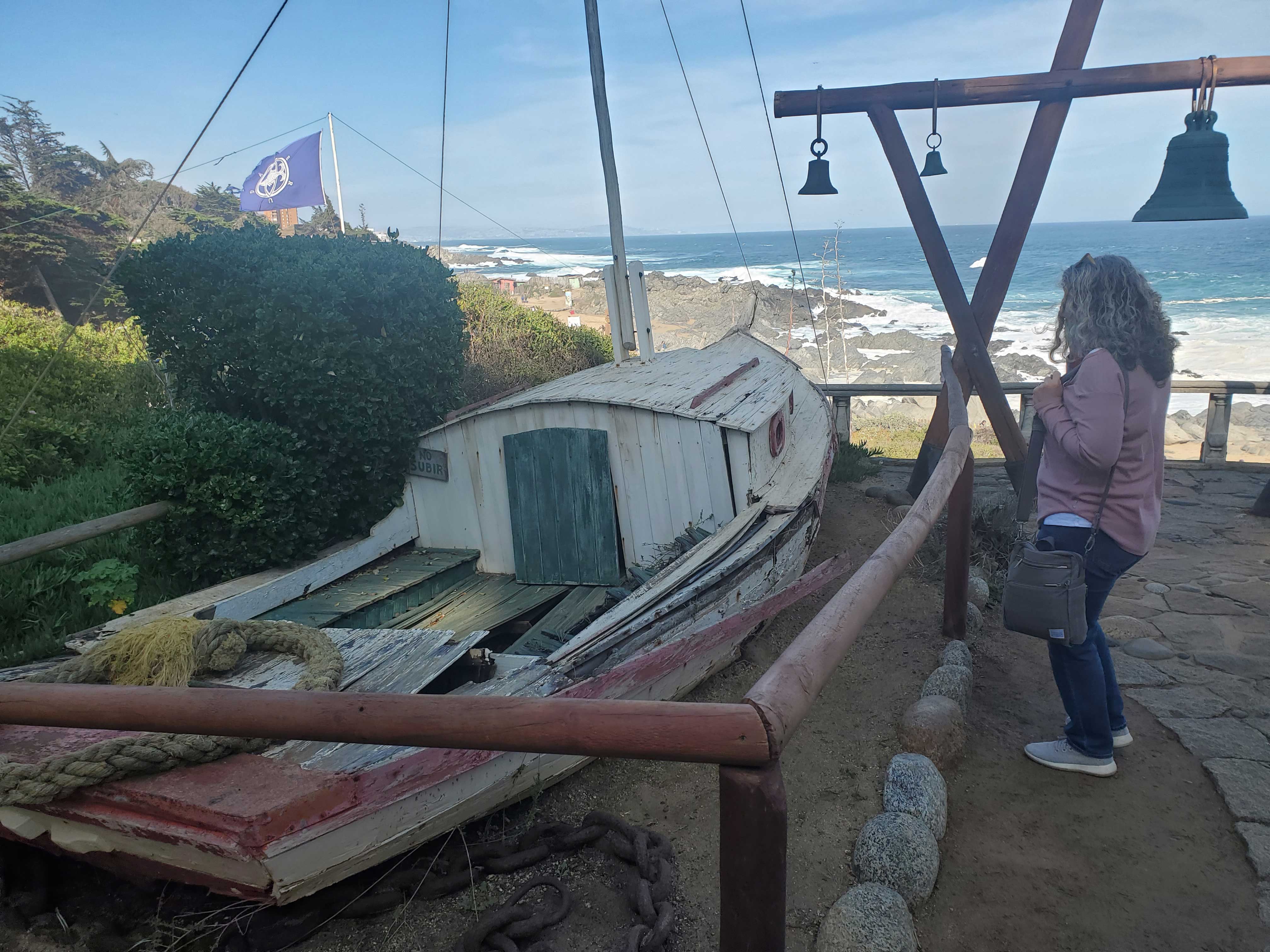
His one connection to the sea was a boat he bought but never sailed. He served as her captain on land and would often sit in it drinking and contemplating the sea. He said he could simulate the feel of the sea by just getting a little tipsy on the deck on land.
Nest to the original house he purchased and restored, he also built a long skinny building he said symbolized Chile herself. Within it are stored and displayed his many collections, including pipes, insects, ships in bottles, Japanese masks, miniature guitars, and anything else that caught his fancy in his travels around the world. Here’s a peek into the main living room at the center of the long hall that that was stolen through a window in the main garden.
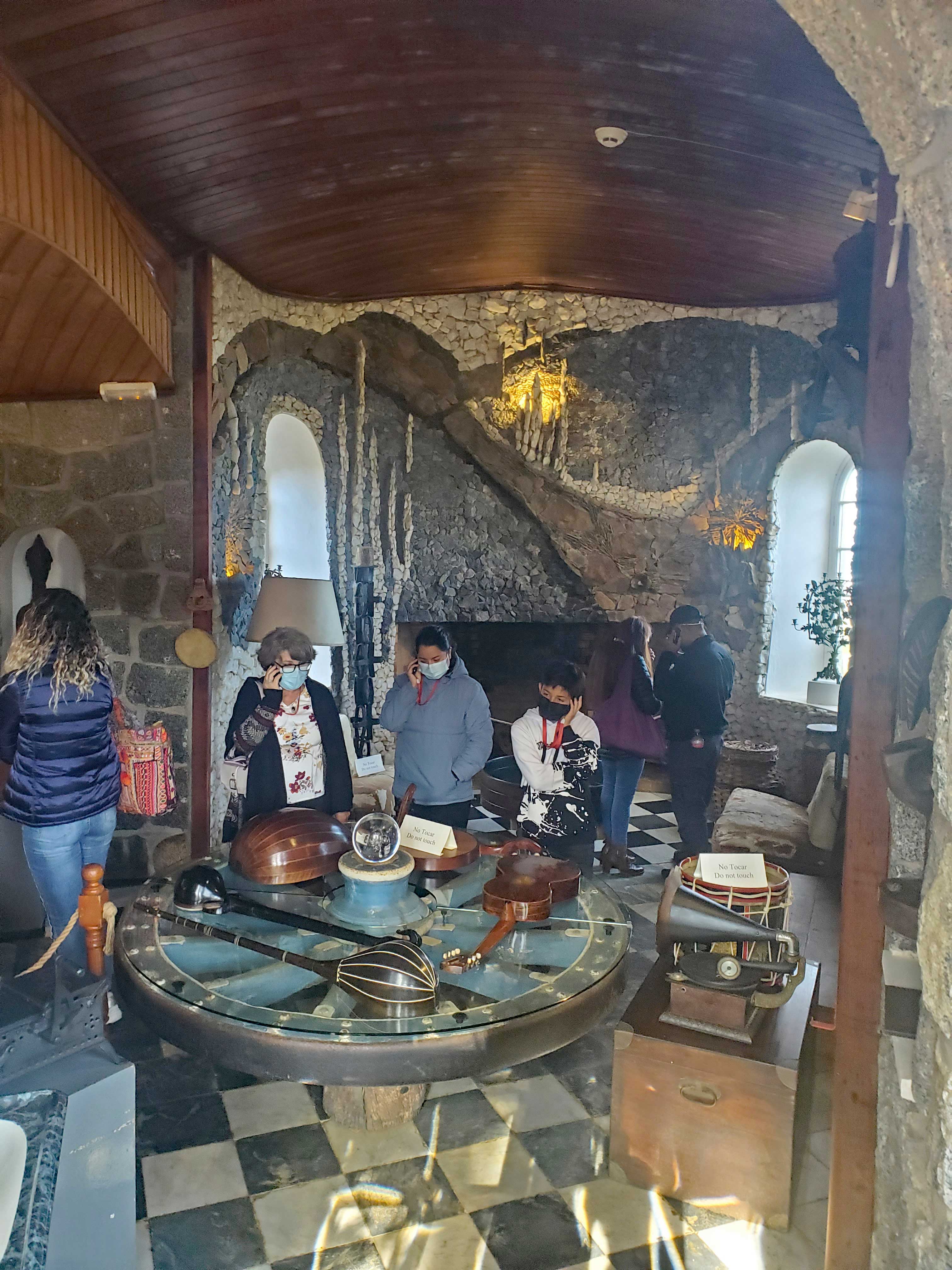
At the far end of the long house sits Neruda’s study with a window looking out upon the sea. I stole another picture inside from that window to capture the desk where he sat and wrote some of his most famous works.
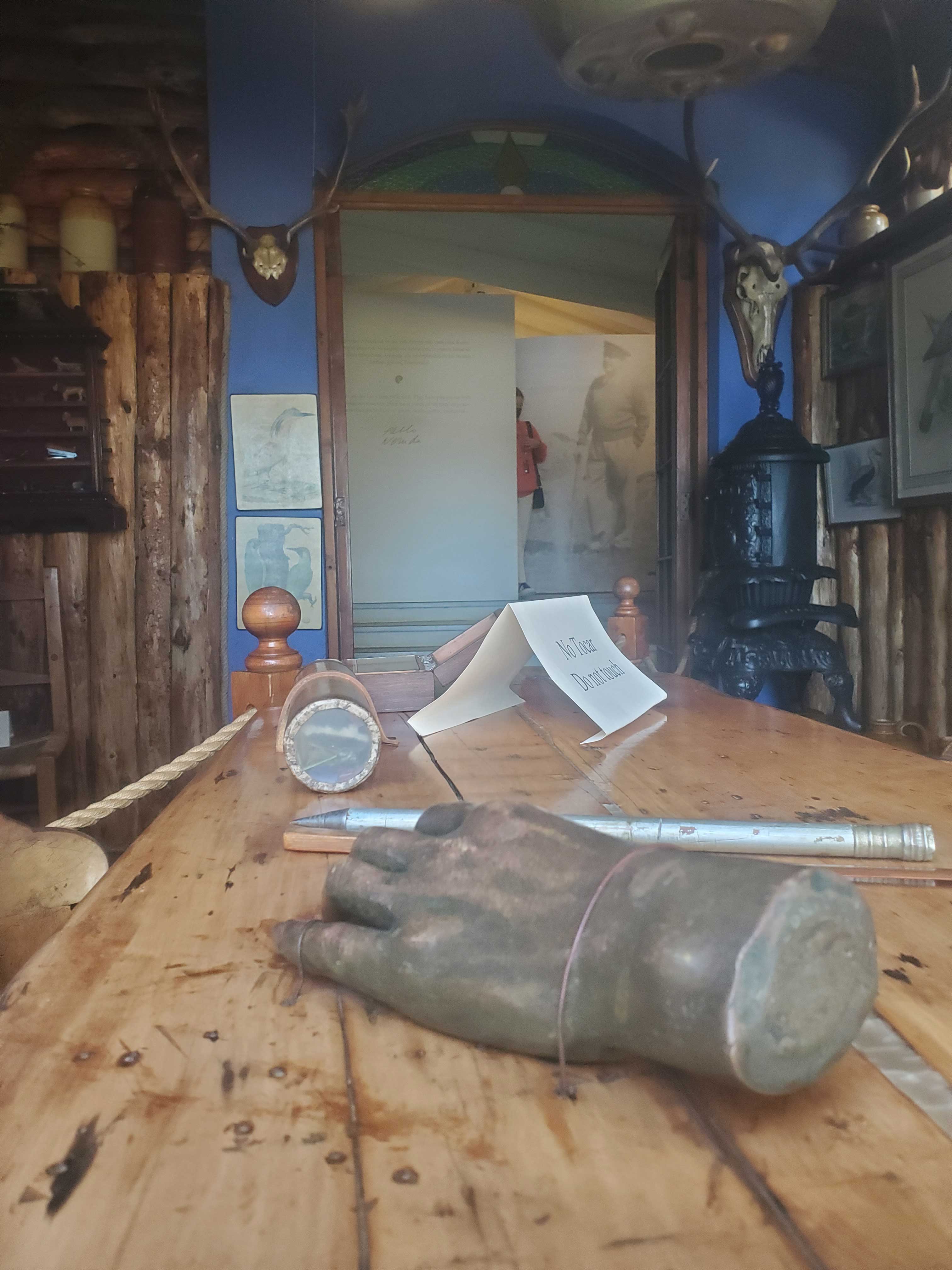
Items on the desk include a spyglass. He always kept one at his desk and by his bed so he could look out upon the sea. You also can’t help but notice the bronze case of a hand dominating the picture. It is an actually cast of Matilde’s left hand, which he used as a paperweight. There was also one on his desk at La Chascona. While it seems an endearing tribute, we just found it kind of creepy.
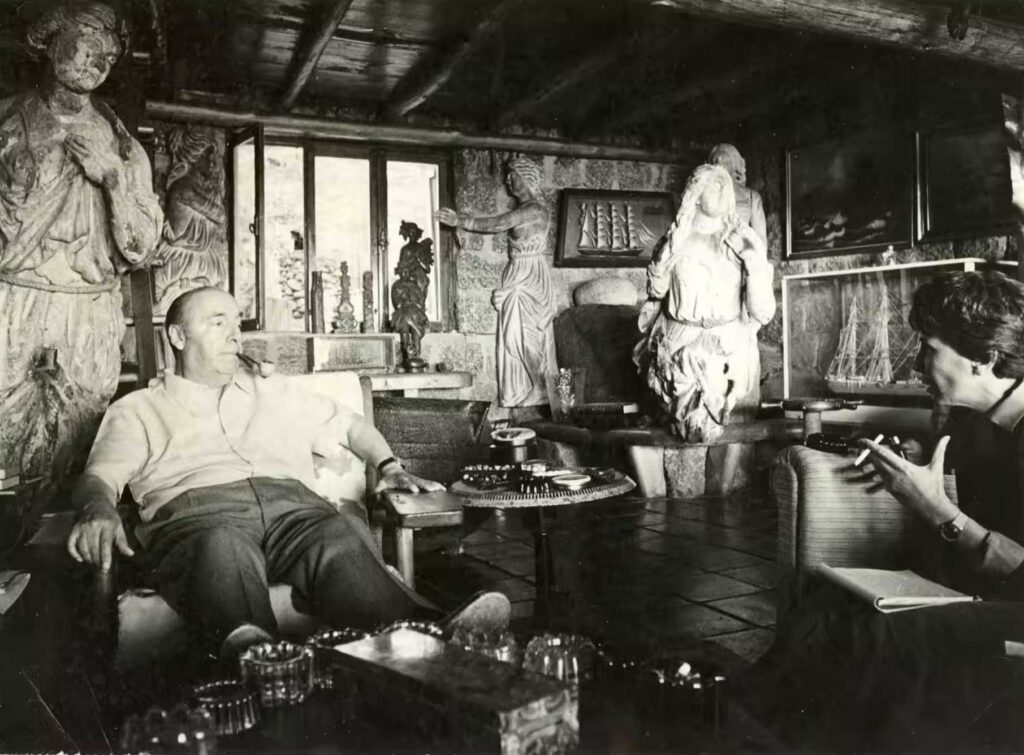
The living room in the original house is dominated by a collection of more than a dozen figureheads. If you don’t know what a figurehead is, then this wouldn’t seem like anything out of the ordinary. Once you’re inside, you realize what an extraordinary, unusual, and incredible thing it really is. Figureheads are the lifesize and often larger carvings of people dominating the bows of sailing vessels. Here’s a picture from the Pablo Neruda Foundation to give you an idea of what a crazy collection it actually is and what it was like sitting among them enjoying a pipe and conversation.
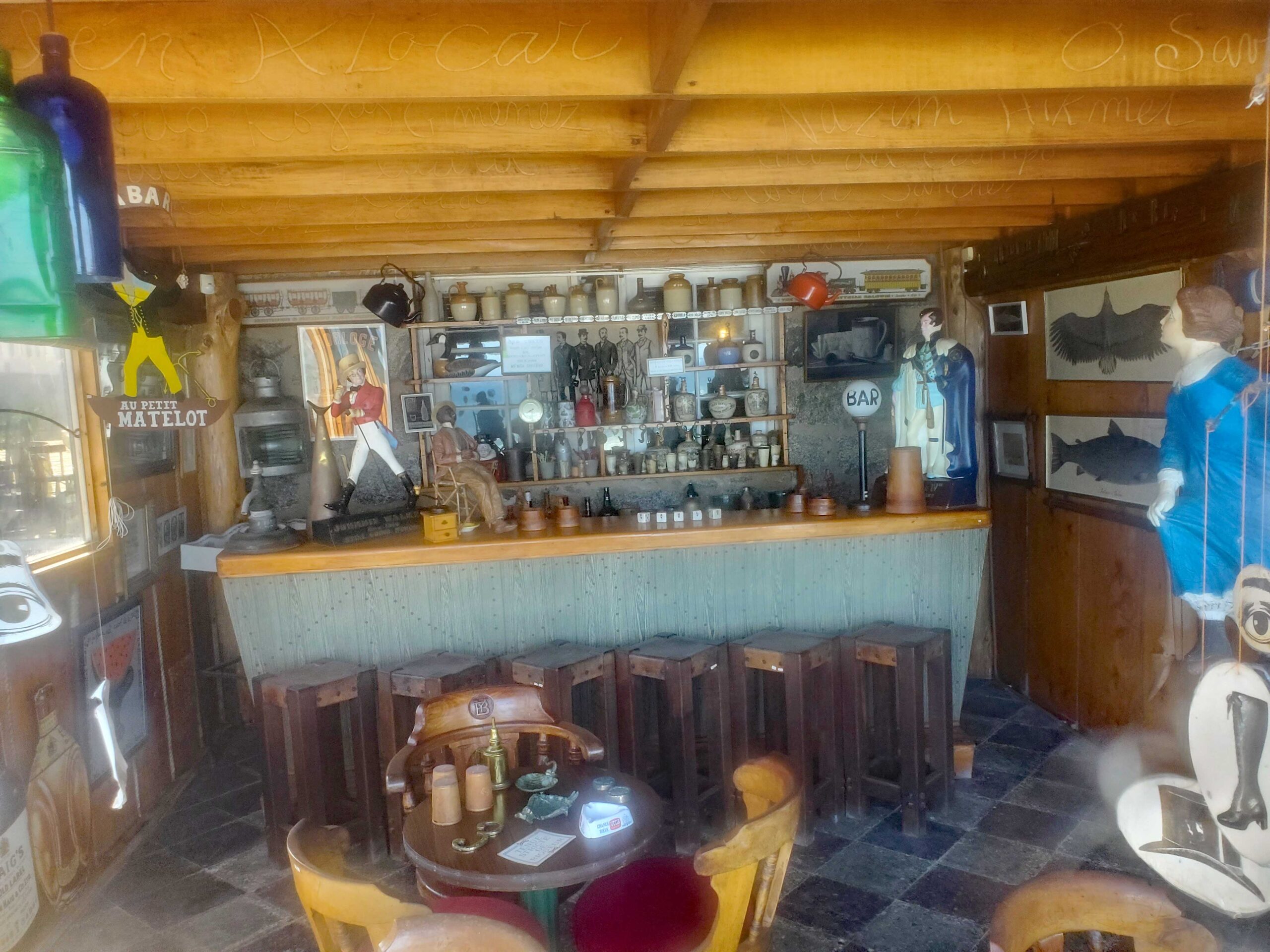
Of course, in true Pablo Neruda style, the rest of the main house is pretty much the bar. The huge bar looks out upon the sea. Many of his visitors and friends carved their names into the beams in the roof for posterity.
Here’s that view of the sea that I keep mentioning. Pablo and Matilde are both interred on a hill outside looking down so that they can enjoy the seaside in perpetuity.
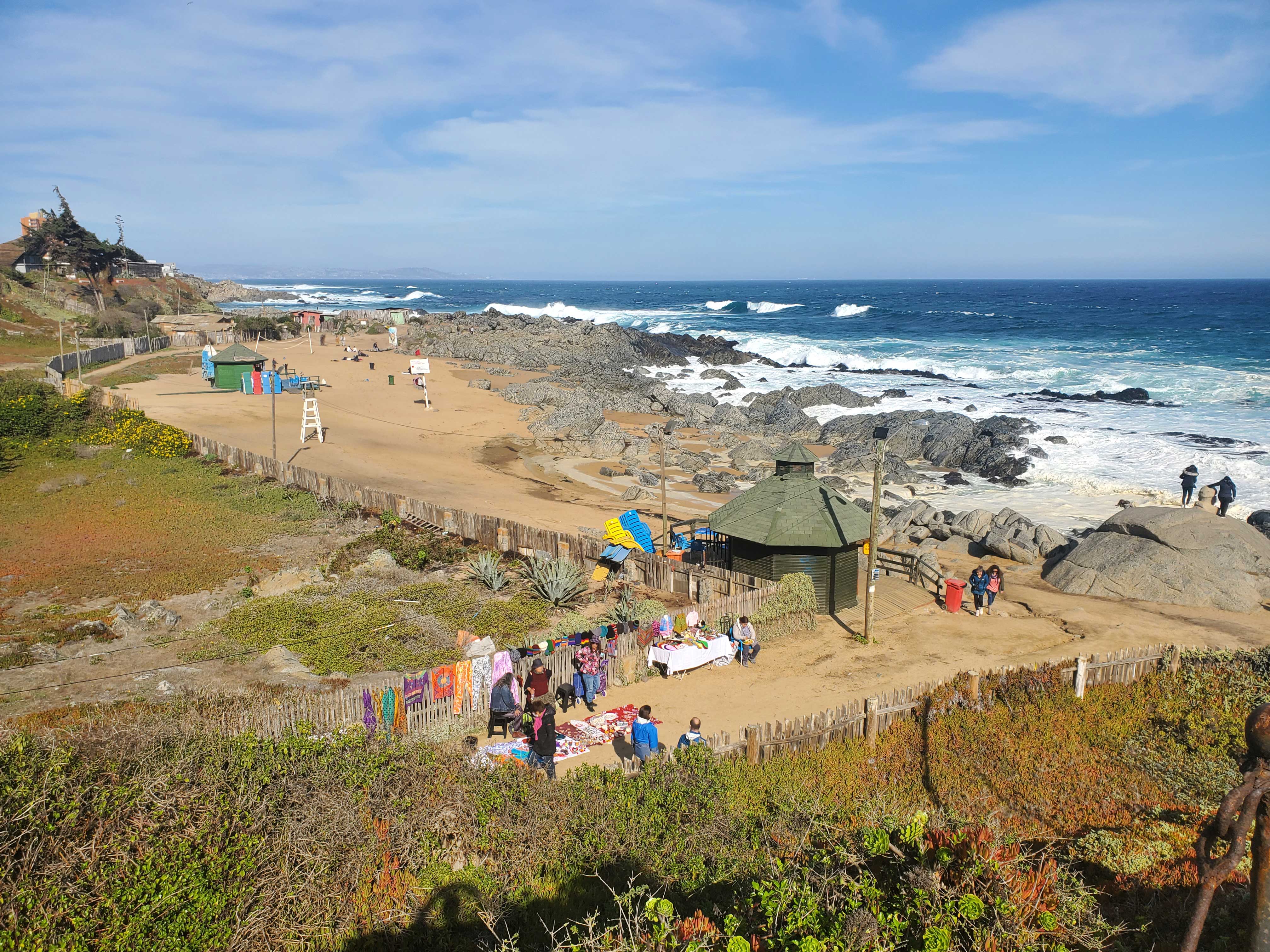
You might notice in the photo above that on the middle right-hand side, there’s an odd protrusion in the top of the rock where two people are standing posing for photographs. That, of course, is a bust of the poet himself.
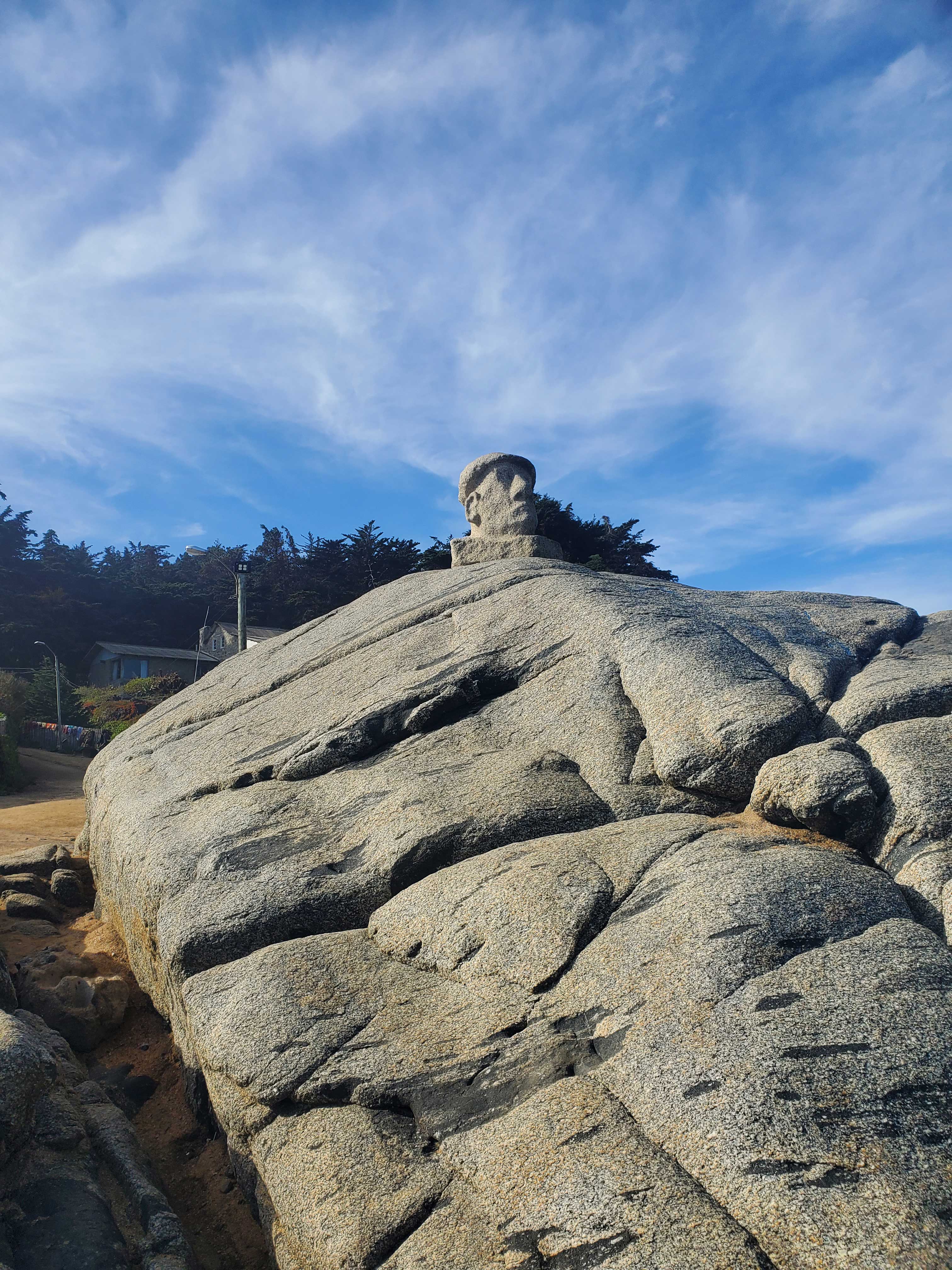
We’ll close this post with a translated line from Love, Reflection, and Happiness that captures his spirit, drive, and dedication to his country and his craft:
It is forbidden not to smile at problems, not to fight for what you want, to abandon everything for fear, not to make your dreams come true.
Pablo Neruda
Fascinating – love the time capsule houses!
I dont know what to say, except that was spectaclar! The line from his poem, is perfect! I have copied it to add to my collection.
So absolutely wonderful! I love Pablo Neruda and you have made the trek so I can live vicariously through you!